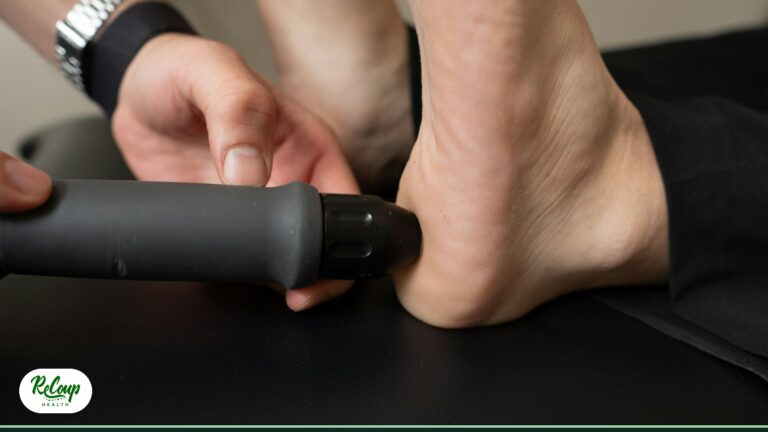

Carpal tunnel syndrome treatments work in steps, from a night wrist splint and activity changes to physiotherapy, an injection and then surgery. A 2023 Cochrane review found that night splinting helped one extra person improve for every 2 people treated. Mild and moderate cases start without surgery. Constant numbness or thumb weakness points to carpal tunnel release.
Key Takeaways
- Treatment starts with a neutral night splint, which the NHS says may need up to 6 weeks to help.
- Nerve glides, tendon glides and workstation changes support splinting in mild and moderate cases.
- Steroid injections ease symptoms for up to three months, but relief fades for many people.
- Surgery suits severe, constant or worsening cases, and the operation takes around 20 minutes.
- Thumb-base weakness, muscle shrinkage or dropping objects needs prompt medical assessment.
What Are the Main Carpal Tunnel Syndrome Treatments
The main carpal tunnel syndrome treatments are night splinting, activity changes, physiotherapy exercises, steroid injections and carpal tunnel release surgery. Care starts with the least invasive option and steps up only when symptoms persist or worsen. Cleveland Clinic states that providers try nonsurgical treatment first.
Carpal tunnel syndrome is pressure on the median nerve inside a narrow channel of wrist bones and ligament. The Lancet Neurology calls it the most common peripheral nerve entrapment syndrome worldwide. A clear plan for that nerve begins with a proper carpal tunnel assessment of severity and daily triggers.
The graphic below shows the four main treatment steps in order of escalation.
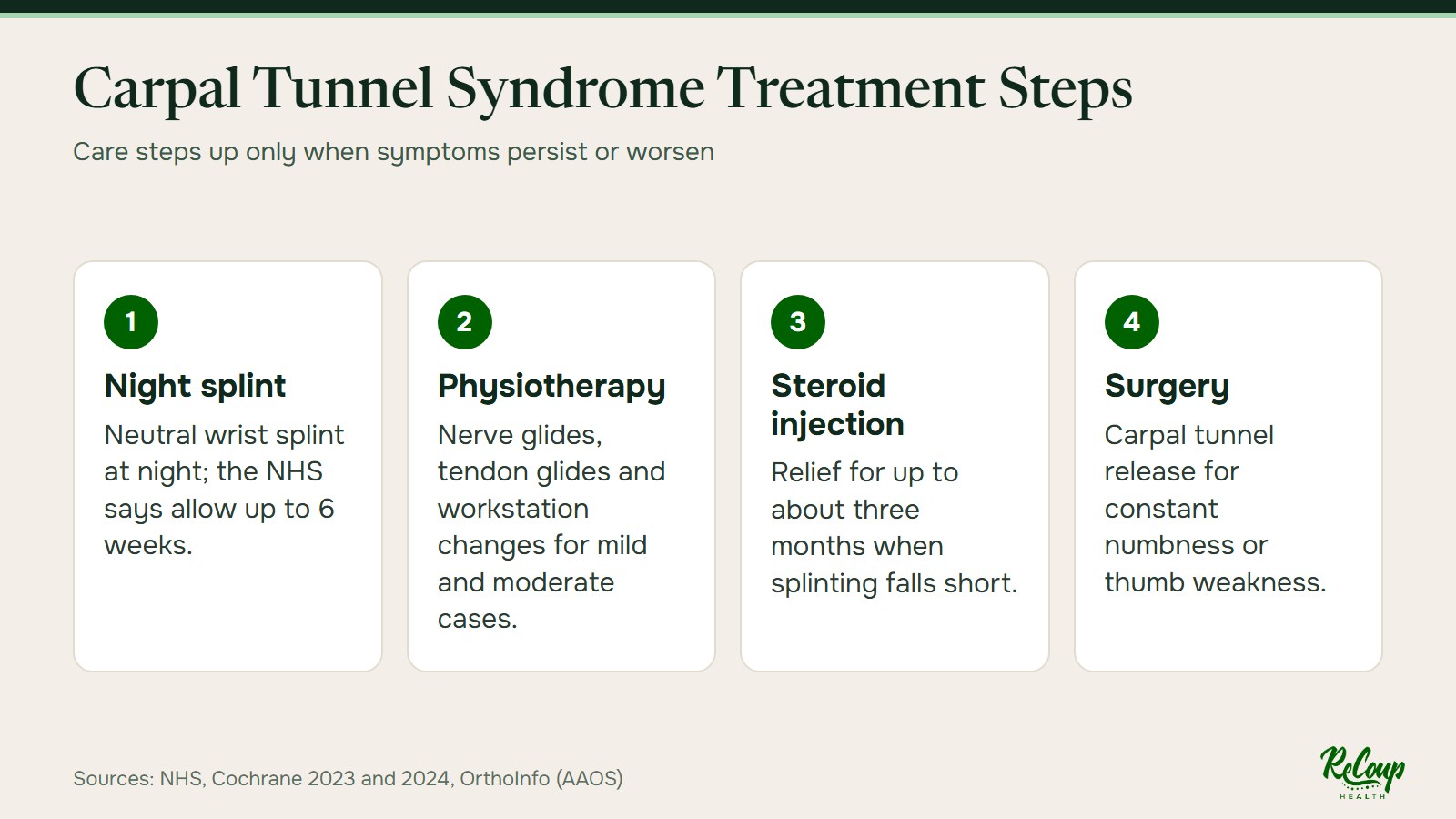
Each treatment step matches a level of severity. Mild night tingling responds to simple measures, while constant numbness calls for faster escalation.
How Do You Fix Carpal Tunnel Syndrome
You fix carpal tunnel syndrome by taking pressure off the median nerve. Splints, rest and exercise lower that pressure without surgery, while carpal tunnel release cuts the ligament to make room. The NHS says surgery usually fixes the condition.
The NHS also says a night splint may need up to 6 weeks before symptoms start to ease. That 6-week window makes patience the first part of fixing carpal tunnel without surgery.
How to Treat Carpal Tunnel Syndrome Without Surgery
Treat carpal tunnel syndrome without surgery by combining a night splint, activity changes and a guided exercise program. Nonsurgical care fits mild and moderate cases with stable nerve function. A 2010 review in the International Journal of Clinical Rheumatology supports conservative care for tolerable symptoms without worsening nerve signs.
The same review found that the benefits of bracing and injections may be short term. Those short-term gains still give exercise and workstation changes time to work. Each nonsurgical tool has a separate job, starting with the brace.
How Does a Brace Help Carpal Tunnel Syndrome
A brace helps carpal tunnel syndrome by holding the wrist straight, which keeps pressure inside the tunnel low. A neutral wrist creates lower tunnel pressure than a bent wrist, according to studies summarized in the 2010 review. Bent wrists during sleep explain why symptoms flare at night.
A 2023 Cochrane review found night splinting improved short-term symptoms compared with no treatment. In that review, one extra person improved for every 2 people splinted. The certainty is low because this result rests on one study of 80 people.
An older 2003 Cochrane review of 21 trials found a hand brace improved symptoms after four weeks. A physiotherapist can check splint fit and wrist angle as part of wrist pain treatment. A brace alone does not restore nerve and tendon movement, so exercise comes next.
What Are the Top 3 Exercises for Carpal Tunnel Syndrome
The top 3 exercises for carpal tunnel syndrome are tendon glides, median nerve glides and a gentle wrist extensor stretch. These exercises help the nerve and tendons slide through the tunnel, as the 2010 review describes. Move slowly and stay below the point of tingling.
- Tendon glides: start with straight fingers, then move through a hook fist, a full fist and a flat fist. Hold each position for 3 seconds.
- Median nerve glide: hold the arm out with the palm up, then slowly extend the wrist and fingers. Release before tingling builds.
- Wrist extensor stretch: straighten the arm with the palm down. Use the other hand to bend the wrist down gently for 15 to 30 seconds.
A 2012 Cochrane review of 16 studies with 741 people rated this exercise evidence as very low quality. Only two studies in that review measured side effects. Stop any exercise that increases numbness, and let a physiotherapist set the dose.
What Does Physiotherapy for Carpal Tunnel Syndrome Include
Physiotherapy for carpal tunnel syndrome includes splint advice, nerve and tendon gliding, joint mobilization and workstation changes. The core of care is a home program you repeat daily between visits. People searching for physical therapy treatment for carpal tunnel syndrome will find the same approach under the Canadian name.
The 2012 Cochrane review described a 14-person trial of nerve and carpal bone mobilization. All treated people improved, while none in the untreated group did. The review still rated that trial very low quality because of its tiny size.
Our hand physiotherapy sessions combine those manual techniques with grip, posture and typing advice. Physiotherapy cannot shrink swelling inside the tunnel quickly, which is where injections enter the plan.
Do Steroid Injections Work for Carpal Tunnel Syndrome
Steroid injections work for carpal tunnel syndrome in the short term, easing symptoms for up to about three months. A 2023 Cochrane review of 14 trials with 994 participants confirmed that short-term benefit over placebo. The relief from a steroid injection is temporary for many people.
A 2026 study in Plastic and Reconstructive Surgery followed 79 injected patients. Of those, 51.9% needed no further procedure, while 48.1% needed another injection or surgery within 1 year. A 2012 study in Hand found 15% had surgery within 1 year and 33% within 5 years.
A family doctor or hand specialist gives these injections after an exam. Injection results also shape the next question, which is how to manage day-to-day pain.
What Pain Relief Works for Carpal Tunnel Syndrome
Pain relief for carpal tunnel syndrome works when it lowers nerve pressure, not just when it dulls pain. Splinting and wrist position change matter more than pills, because medicine does not open the tunnel. Over-the-counter pain medicine can take the edge off a flare.
Cleveland Clinic advises against taking over-the-counter anti-inflammatory medicine for more than 10 days in a row without medical advice. Ask your pharmacist or family doctor which medicine suits your health history. The table below compares how strong the evidence is for each main option.
Which Carpal Tunnel Syndrome Treatments Have the Strongest Evidence
Carpal tunnel syndrome treatments with the strongest evidence are surgery for lasting improvement and splints or injections for short-term relief. Surgery carries moderate-certainty evidence, while exercise evidence is very low quality, according to Cochrane reviews from 2012 to 2024. The table lists each option with its main benefit and evidence grade.
| Treatment | Main benefit | Evidence grade | Source |
|---|---|---|---|
| Carpal tunnel release surgery | Higher rate of clinical improvement than splinting (risk ratio 2.10) | Moderate certainty | Cochrane 2024 |
| Steroid injection | Symptom relief up to three months | Supported short term; relief fades | Cochrane 2023 |
| Night wrist splint | One extra person improves for every 2 treated | Low certainty, one 80-person study | Cochrane 2023 |
| Nerve and tendon gliding | Possible symptom relief and better hand movement | Very low quality | Cochrane 2012 |
| Acupuncture | Possible add-on for symptom relief | Limited, small trials | NIH consensus 1997, cited in 2010 review |
The table shows that no single option wins on every measure. The graphic below pulls out four figures that shape treatment timing.
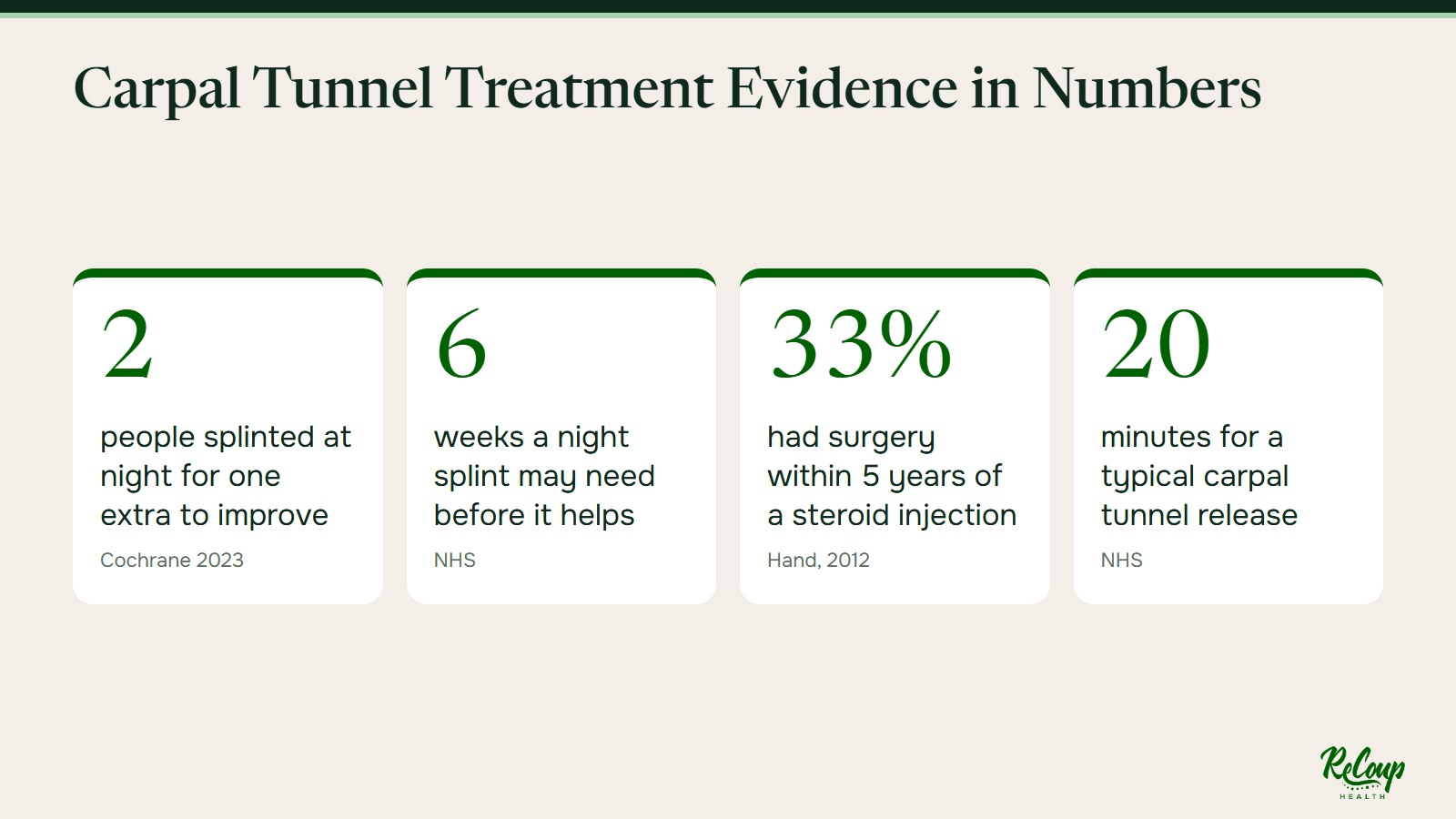
These numbers explain why splints come first and why injections may not end the story. Daily habits decide how fast those treatments work.
How Do I Get Instant Relief From Carpal Tunnel
You get instant relief from carpal tunnel by changing wrist position, shaking out the hand and pausing the trigger task. Repositioning or vigorously shaking the hand can ease symptoms within moments, according to the 2010 review. That quick fix wears off once the trigger returns.
Home treatment for carpal tunnel syndrome builds on that quick relief with a few daily habits:
- Keep the wrist straight while typing, driving and holding a phone.
- Take short breaks from gripping or typing tasks to rest the hand.
- Do gentle tendon and nerve glides two to three times a day.
- Wear the night splint every night until symptoms settle.
These home remedies for hand nerve pain ease pressure, but they do not reverse nerve damage. Night symptoms need their own plan.
How to Relieve Hand Pain at Night
Relieve hand pain at night by wearing a neutral wrist splint and keeping the hands out from under the pillow. A straight wrist during sleep keeps tunnel pressure low. NIAMS notes that symptoms often first appear at night and fade during the day.
Sleep on the back or side with the arms relaxed in front of the body. Hang the hand over the side of the bed and shake it gently after waking with tingling. Those night steps work better when daytime habits stop adding strain.
What Not to Do With Carpal Tunnel Syndrome
Do not keep the wrist bent for long periods, grip tools hard or push through rising numbness. Repetitive wrist bending combined with gripping raises carpal tunnel risk, according to the 2010 review. Vibrating power tools also appear on that list of reported risk factors.
Avoid sleeping on curled wrists, leaning on the heel of the hand and ignoring a splint that feels too tight. Heavy hand use at work may need task changes, a standard part of care for manual work injuries. Some cases still progress despite good habits, and that is when surgery enters the conversation.
When Is It Time for Carpal Tunnel Surgery
It is time for carpal tunnel surgery when numbness is constant, the thumb base weakens or shrinks, or nonsurgical care fails. Constant symptoms and thumb muscle weakness signal more advanced nerve compression, according to OrthoInfo from the American Academy of Orthopaedic Surgeons. Surgery cuts the transverse carpal ligament to give the nerve more room.
A 2024 Cochrane review found surgery probably gives a higher rate of clinical improvement than splinting. The same review found surgery probably reduces the need for later surgery. A 2025 meta-analysis of 12 trials found injections and release performed alike for 6 months, but injections failed more by 1 year.
How Is Severe Carpal Tunnel Syndrome Treated
Severe carpal tunnel syndrome is treated with carpal tunnel release, done as open or endoscopic surgery. Severe carpal tunnel syndrome treatment aims to stop further nerve damage, since muscle wasting signals advanced compression, according to OrthoInfo. The NHS says the operation takes around 20 minutes.
A hand surgeon confirms severity with an exam and nerve conduction tests. Those results also guide how long surgery can safely wait.
How Long Can You Put Off Carpal Tunnel Surgery
You can put off carpal tunnel surgery only while symptoms stay intermittent and thumb strength stays normal. No fixed safe waiting period exists, because nerve damage risk depends on symptoms and test results. In one untreated group of 274 hands followed for 10 to 15 months, about a quarter worsened.
Seek prompt medical care for any of these red flags:
- Numbness that stays constant, day and night.
- Visible shrinkage or weakness at the base of the thumb.
- Dropping objects or losing fine hand control.
- Sudden numbness with face droop, speech trouble or leg weakness, which needs 911.
Once surgery is done, recovery follows a clear set of milestones.
How Long Does Recovery Take After Carpal Tunnel Release
Recovery after carpal tunnel release takes about a month for daily tasks and up to a year for full recovery. Night symptoms improve dramatically for most patients in the first week, according to OrthoInfo. Grip and pinch strength return by about 2 to 3 months.
The NHS says it can take a month to return to normal activities. The timeline below shows each recovery milestone after surgery.
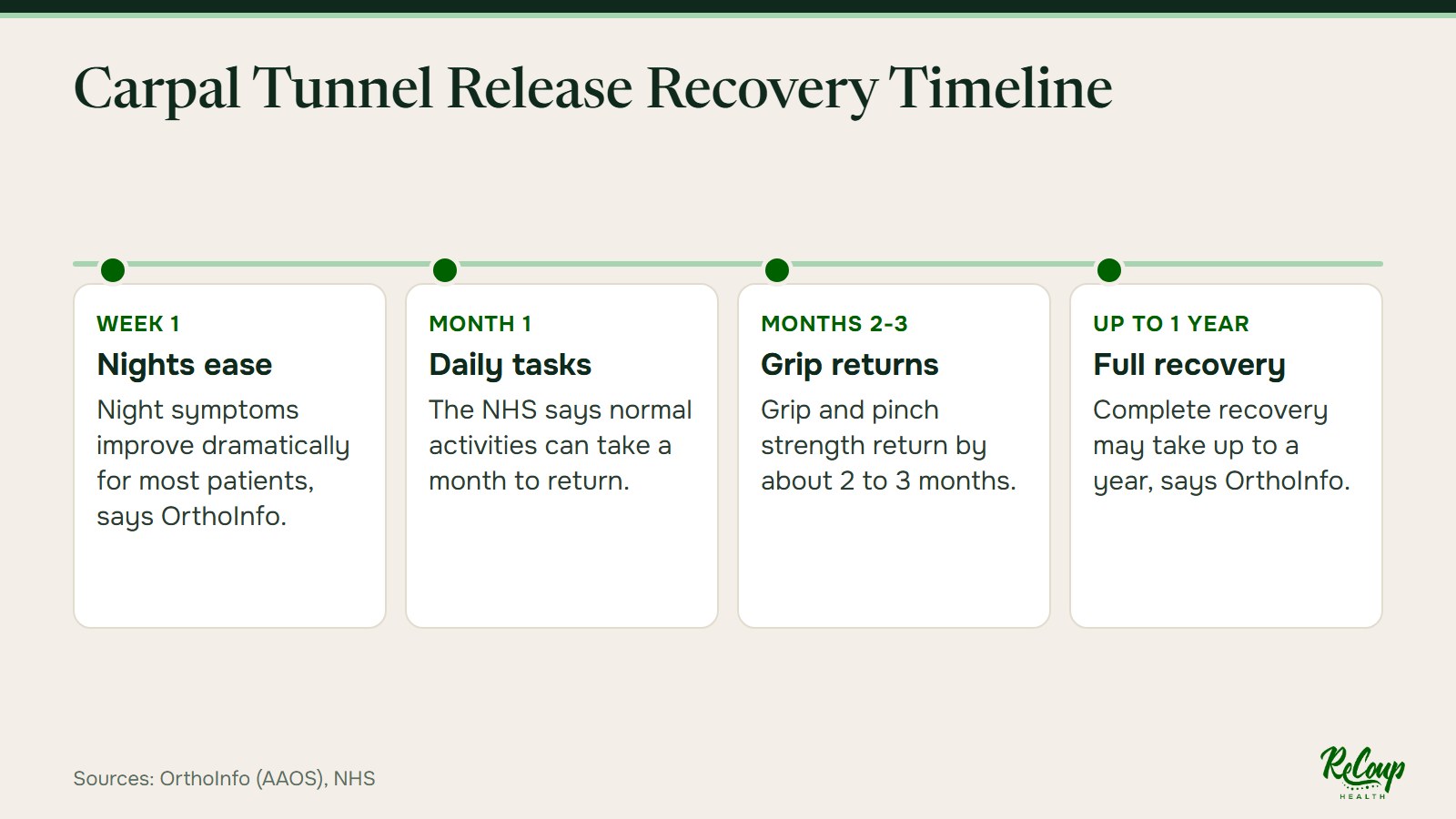
Scar care, gentle movement and grip work support each milestone. A structured post-surgery hand rehab plan covers those steps in order.
What Else Should You Know About Treating Carpal Tunnel Syndrome
Can Chiropractic Help Carpal Tunnel Syndrome
Chiropractic can help carpal tunnel syndrome as part of a wider plan, though evidence is limited. Wrist bone mobilization and nerve gliding have small, very low-quality trials behind them, according to the 2012 Cochrane review. Our chiropractic wrist care pairs gentle joint work with home exercise.
Does Acupuncture Help Carpal Tunnel Syndrome
Acupuncture may help carpal tunnel syndrome as an add-on treatment. A 1997 NIH consensus statement called acupuncture a possible adjunct for carpal tunnel, as cited in the 2010 review. That review also found the overall acupuncture evidence limited and based on small trials.
Does Massage Help Carpal Tunnel Syndrome
Massage may ease forearm tightness linked to carpal tunnel syndrome, but no trial in the sources reviewed here tested it alone. Massage works as comfort care alongside splinting and exercise. Gentle wrist massage therapy avoids deep pressure over the wrist crease.
How Is Carpal Tunnel Treated During Pregnancy
Carpal tunnel during pregnancy is treated with a night splint, hand positioning and gentle exercise. Carpal tunnel syndrome pregnancy treatment stays conservative, and the NHS says it sometimes improves by itself in a few months. A 2010 Muscle and Nerve review found many women still had symptoms a year or more after delivery.
Talk to your family doctor or midwife before using any medicine. Splint and exercise guidance fits well within pregnancy hand care.
Is Squeezing a Ball Good for Carpal Tunnel
Squeezing a ball is not a proven carpal tunnel treatment and can aggravate symptoms. Hard, repeated gripping adds load to the tendons inside the tunnel. Light grip work belongs later in rehab, once tingling has settled.
What Gets Mistaken for Carpal Tunnel
Conditions mistaken for carpal tunnel include a pinched nerve in the neck, thumb-base arthritis and nerve irritation at the elbow. Neck nerve symptoms spread past the hand into the arm and shoulder. A neck disc herniation can cause similar finger tingling, so a full exam checks the neck too.
Frequently Asked Questions About Carpal Tunnel Syndrome Treatments
What Are 5 Symptoms of Carpal Tunnel
Five symptoms of carpal tunnel are numbness, tingling, burning, pain and a weak grip. OrthoInfo lists the first four in the thumb, index, middle and ring fingers, and the NHS adds difficulty gripping. Symptoms commonly wake people at night, according to the same source.
How Long Does It Take for Carpal Tunnel to Heal on Its Own
Carpal tunnel can take months to settle on its own, and many cases do not. About a quarter of 274 untreated hands improved over 10 to 15 months, while half stayed the same. Talk to your physiotherapist or family doctor about starting care sooner.
Can Carpal Tunnel Syndrome Return After Surgery
Carpal tunnel syndrome can return after surgery, though the NHS says surgery usually fixes it. Full recovery may take up to a year, so slow progress is not the same as a return. Report new numbness to your surgeon.
What Can You Do to Prevent Carpal Tunnel Syndrome
You can lower carpal tunnel risk with regular rest breaks, a neutral wrist and good tool technique. Cleveland Clinic recommends frequent breaks and good posture during hand-heavy work. Stretch the wrists before and after intense hand activity.
How Recoup Health Helps With Carpal Tunnel Syndrome
Recoup Health helps with carpal tunnel syndrome through splint guidance, nerve and tendon gliding, manual therapy and workstation advice. We match carpal tunnel syndrome treatments to your severity and daily tasks. No doctor’s referral is needed to book an assessment.
Our physiotherapists, chiropractor and registered massage therapists share notes on each plan for carpal tunnel care. We refer you to your family doctor or a surgeon when red flags appear. That shared plan keeps splinting, exercise and hands-on care moving in the same direction from week to week.
Each clinician brings hands-on training in wrist, elbow and neck problems, including nerve glides and joint mobilization. Meet the wrist care team and their areas of focus before your first visit. A first visit can include a hand, wrist and neck exam.
Questions about splints, exercise or surgery timing can go straight to the front desk. Use the clinic enquiry form to arrange a visit in Vaughan. Early care gives the median nerve a stronger chance to settle.
Hand numbness deserves an early look before nerve damage sets in. The Recoup Health therapists can start your plan this week.