71 Innovation Dr, Unit 6, Vaughan · No referral needed · Direct billing available
Mon to Fri 9 am to 8 pm · Sat 9 am to 4 pm
Home / Conditions / Herniated disc
Back and spine · Condition guide
Recoup Health provides herniated disc treatment in Vaughan for people whose spinal disc has pushed through its tougher outer layer and irritated a nearby nerve. Our physiotherapy and chiropractic team calms that irritation first, then rebuilds the strength and movement your spine needs.

Treated with
Physio, chiropractic, osteopathy
Referral
Not needed
Billing
Direct to most insurers
Spinal discs are the cushions between your vertebrae, each with a firm outer ring and a gel-like centre. A herniated disc, sometimes called a slipped or bulging disc, is when part of that centre pushes outward through a weak spot in the ring.
Discs in the lower back are affected most often, followed by the neck. Some herniations cause no pain at all and only show up on a scan. Others press on or inflame a nerve root, which can send pain, tingling or weakness into a leg, as with sciatica down the leg, or into an arm when the disc is in the neck. The encouraging part is that many disc herniations settle over time with well-planned conservative care.
●
Back or neck pain that flares with bending, sitting or lifting
●
Pain, tingling or numbness that travels into an arm or leg
●
Muscle weakness in the affected arm or leg
●
Pain that spikes when you cough, sneeze or strain
●
Trouble finding a comfortable position to sleep
●
Gradual wear in the discs that comes with age
●
Lifting heavy loads with a rounded back, especially with a twist
●
A fall, a sports collision or an auto accident injury
●
Long hours of sitting that keep pressure on the lower discs
●
Repetitive bending and lifting in physical jobs
A herniated disc needs emergency care if you lose control of your bladder or bowels, feel numbness in the groin or inner thighs, or notice leg weakness that is spreading or getting worse quickly. Go to the nearest emergency department in these cases. A disc in the neck that causes clumsy hands or trouble walking also needs a physician's assessment first.
Treatment options at Recoup Health
Most disc injuries are managed without surgery, and our first job in herniated disc therapy is finding the positions and movements that reduce your nerve symptoms. From there, the Recoup Health care team builds your plan in stages and will tell you if your symptoms call for a medical review.
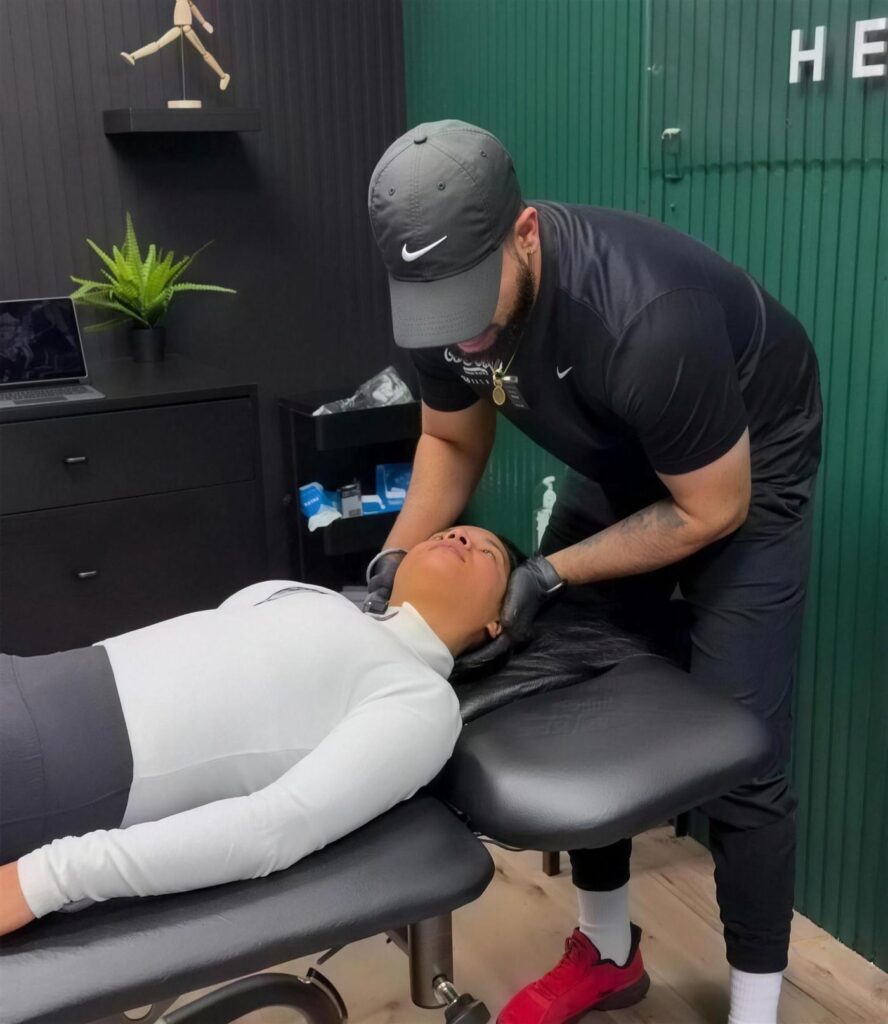
Directional exercises, nerve glides and core strength to reduce nerve pressure and rebuild control.
See physiotherapy
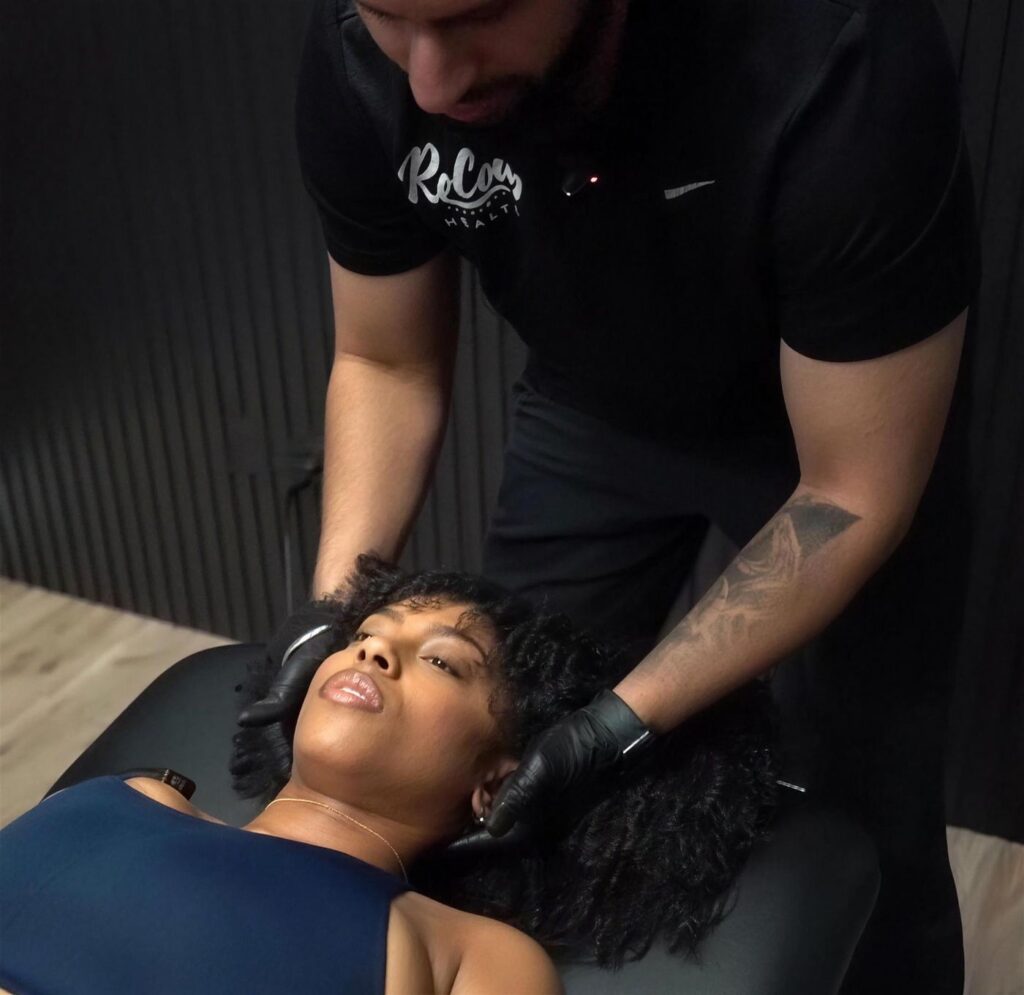
Gentle mobilization of the joints above and below the disc to ease stiffness and guarding.
See chiropractic care
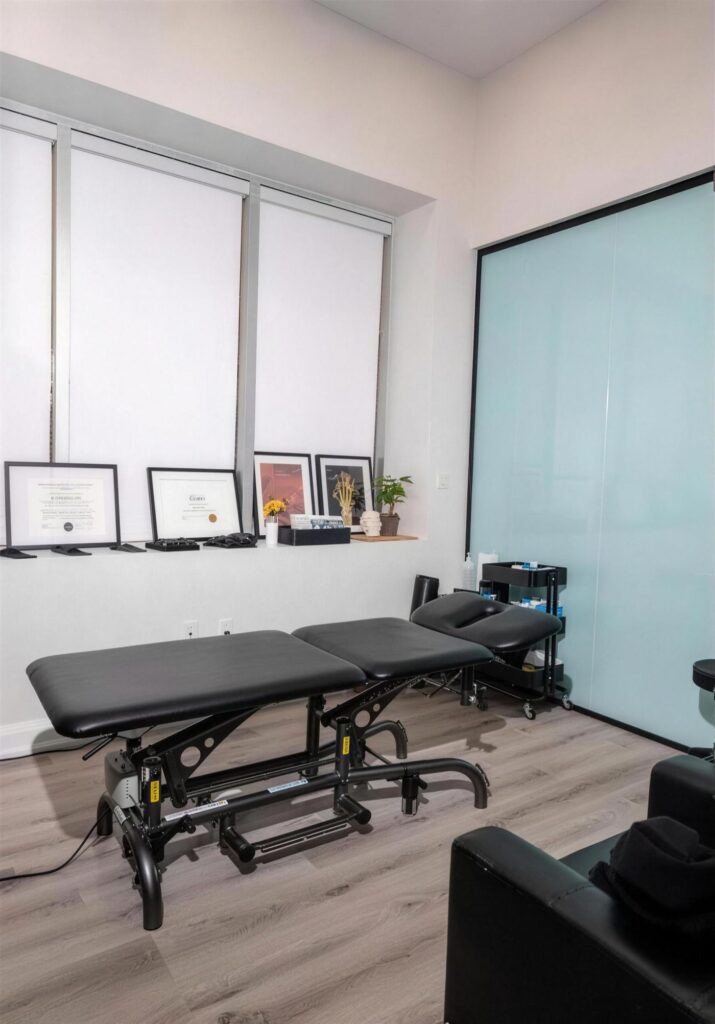
Soft tissue and joint techniques that ease muscle spasm around an irritated disc.
See osteopathy

Structured rehab before and after disc surgery if your surgeon recommends an operation.
See pre and post-operative care
Your recovery plan
01
Pain-easing positions, gentle movement and hands-on care to quiet arm or leg symptoms.
02
Gradual loading so sitting, bending and walking become comfortable again.
03
Progressive strength work in our rehab gym to prepare you for work, sport and lifting.
Simple daily habits can protect a healing disc between visits. If you're not sure which ones suit your stage of recovery, send our team a message.
Change position often
Switch between sitting, standing and walking rather than holding one posture.
Hinge at the hips
Bend from your hips with a long spine when you pick things up.
Support your sleep
A pillow under your knees, or between them on your side, can ease pressure on the lower back.
Track your symptoms
Note whether arm or leg symptoms move toward or away from your spine, and share it at your next visit.
Practitioners who treat herniated disc
Herniated disc FAQ
Can’t find your answer? Call us at 905-605-9020 or email info@recouphealth.ca.
A herniated disc can often heal without surgery, and most people are advised to try conservative care first. Over time the body can reabsorb part of the disc material, and nerve irritation tends to settle. Surgery is usually considered for severe or worsening weakness, or pain that doesn't improve with treatment.
Chiropractic care can be safe for a herniated disc when techniques are chosen carefully after a full assessment. Nerve function is checked first, and gentle mobilization is usually preferred over forceful techniques while a nerve is irritated. If your exam suggests you need a medical review, you'll be told before any treatment.
The exercises that help a herniated disc are the ones that reduce your arm or leg symptoms, and they vary from person to person. Some people respond to gentle extension movements, others to walking or core control work. Your physiotherapist will test a few options and build a short home program around what helps.
The difference between a bulging disc and a herniated disc is how far the disc material has moved. A bulge spreads outward fairly evenly around the disc, while a herniation pushes through a tear in the outer ring. Either one can be painless or painful, so we treat your symptoms rather than the label on a scan.
Many people can keep working with a herniated disc, sometimes with short-term changes to their duties. Desk workers may need more movement breaks, and physical jobs may need lighter lifting for a while. We'll talk through what's realistic for your job during your assessment.
You should bring your MRI or X-ray report to your first appointment if you have one. Imaging helps us understand your history, although treatment is guided mainly by your symptoms and exam. If you've never had a scan, you can still book at our Vaughan physiotherapy and chiropractic clinic without a referral.
Related conditions

Reclaim · Recover · Recoup
Book online in under a minute, or call and our front desk will match you with the right practitioner for your concern.
Visit the clinic
71 Innovation Dr, Unit 6
Vaughan, ON L4H 0S3
Mon to Fri · 9 am to 8 pm
Saturday · 9 am to 4 pm
Sunday · Closed