
How to relieve knee pain comes down to three moves: calm the joint, keep it moving, then build strength around it. The NHS advises an ice pack for up to 20 minutes every 2 to 3 hours after a minor strain. Exercise then lowers arthritis knee pain by about 12 points on a 100-point scale, according to Cochrane. Newer injections and procedures add options when those steps fall short.
Key Takeaways
- Ice, relative rest and elevation settle a minor knee flare within a few days, according to the NHS.
- Exercise is a core treatment for knee osteoarthritis in the OARSI 2019 and ACR 2019 guidelines.
- Weight loss plus exercise eased knee pain more than exercise alone in the 454-person IDEA trial.
- Newer options such as platelet-rich plasma show mixed or early evidence, so they sit behind exercise, not in place of it.
- A knee that cannot bear weight, locks, or turns red and hot with a fever needs urgent care.
How Do You Relieve Knee Pain at Home Right Away?
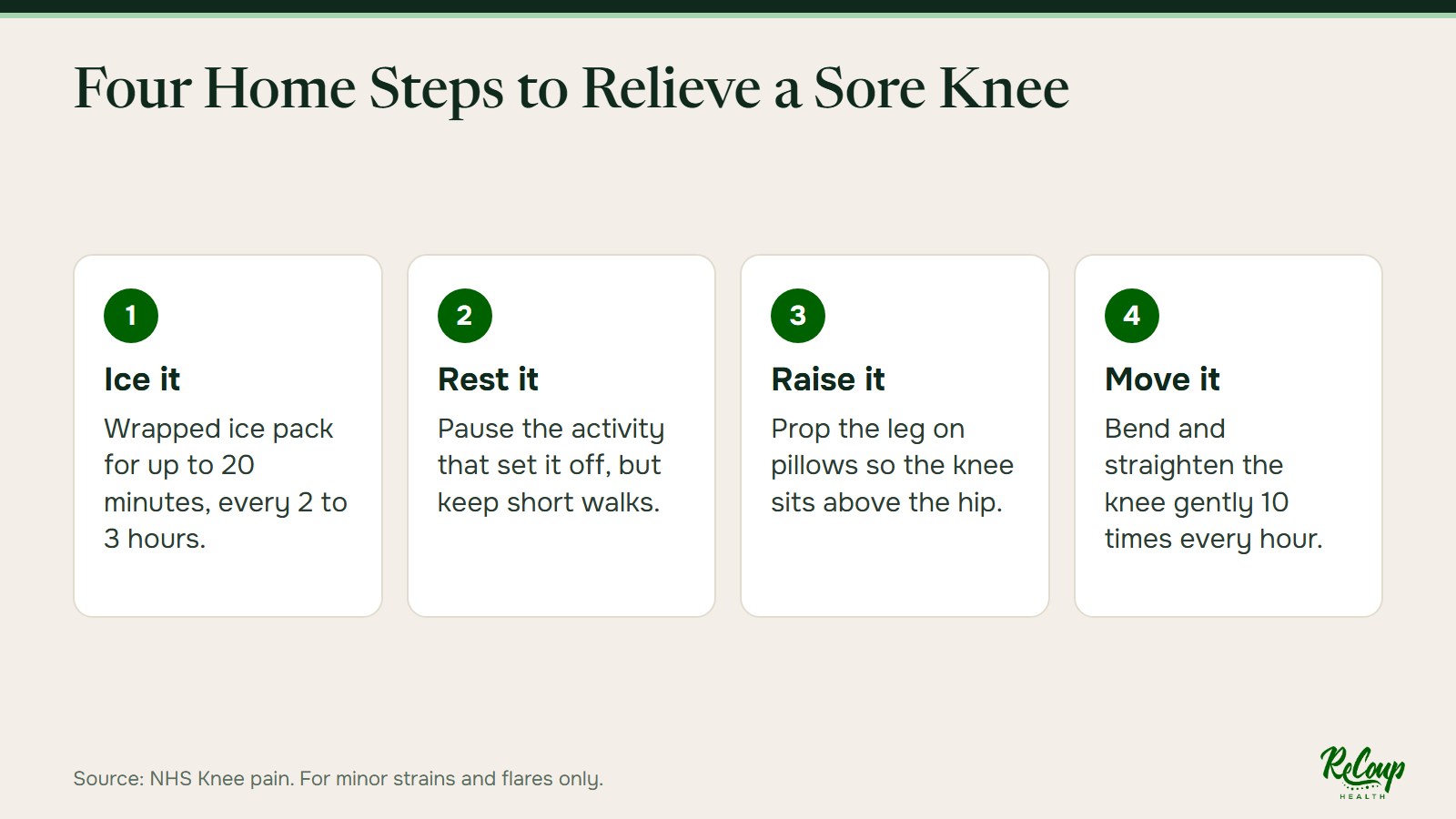
Relieve knee pain at home right away by cooling the joint, unloading it and raising it for the first few days. The NHS advises an ice pack wrapped in a towel for up to 20 minutes every 2 to 3 hours. This home routine suits minor sprains, strains and arthritis flares, not fractures or joint infections.
Follow these five steps for a new, minor knee flare:
- Wrap an ice pack in a thin towel and hold it on the knee for up to 20 minutes.
- Rest the knee from the activity that set it off, but keep walking short distances around the home.
- Raise the leg on pillows so the knee sits above hip level while you sit or lie down.
- Wear a light compression sleeve or elastic bandage during the day to limit swelling.
- Bend and straighten the knee gently 10 times every hour to keep the joint from stiffening.
The NHS says people with a minor knee injury should start to feel better in a few days. Knee pain that is not improving within a few weeks needs a proper assessment. A structured knee pain care plan from a physiotherapist then finds the cause and sets the next stage of loading.
The graphic below shows the four home relief steps that come first after a minor knee strain.
These home steps lower pain quickly, which leads to the question of what the fastest route to relief looks like.
What Is the Fastest Way to Relieve Knee Pain?
The fastest way to relieve knee pain is to unload and cool the joint, then restart gentle movement within 2 days. Ice numbs the area within minutes, and gentle movement keeps the muscles switched on.
People searching for how to relieve knee pain fast also ask about relief in 30 seconds. A knee hug, a slow leg swing or a change of position can ease stiffness in seconds. Those quick fixes give short comfort, while lasting change comes from strength work over weeks.
Medication is another fast option for some people. The ACR 2019 guideline from the American College of Rheumatology strongly recommends topical and oral anti-inflammatory drugs for knee osteoarthritis. A pharmacist or family doctor can confirm which product is safe with your health history.
Fast relief lasts only when irritating habits change, which leads to what to avoid.
What Should You Not Do If Your Knee Hurts?
You should not rest a sore knee for weeks, push through sharp pain, or jump straight back into high-impact sport. Total rest weakens the thigh muscles that protect the joint. Weak muscles then let more force reach the cartilage on every step.
These five habits make bad knees worse:
- Staying in bed or on the couch for days, which stiffens the joint and drains muscle strength.
- Playing through sharp, catching or swelling pain during sport or heavy work.
- Returning to running, jumping or deep squats before the knee tolerates daily walking.
- Kneeling on hard floors for long periods without padding.
- Ignoring a knee that locks, gives way or swells again after each activity.
A common mistake that makes bad knees worse is giving up movement altogether. The Osteoarthritis Research Society International (OARSI) 2019 guideline lists exercise as core care for knee osteoarthritis. Movement is therefore the habit to protect, and walking is the simplest place to start.
Does Walking Help Knee Pain?
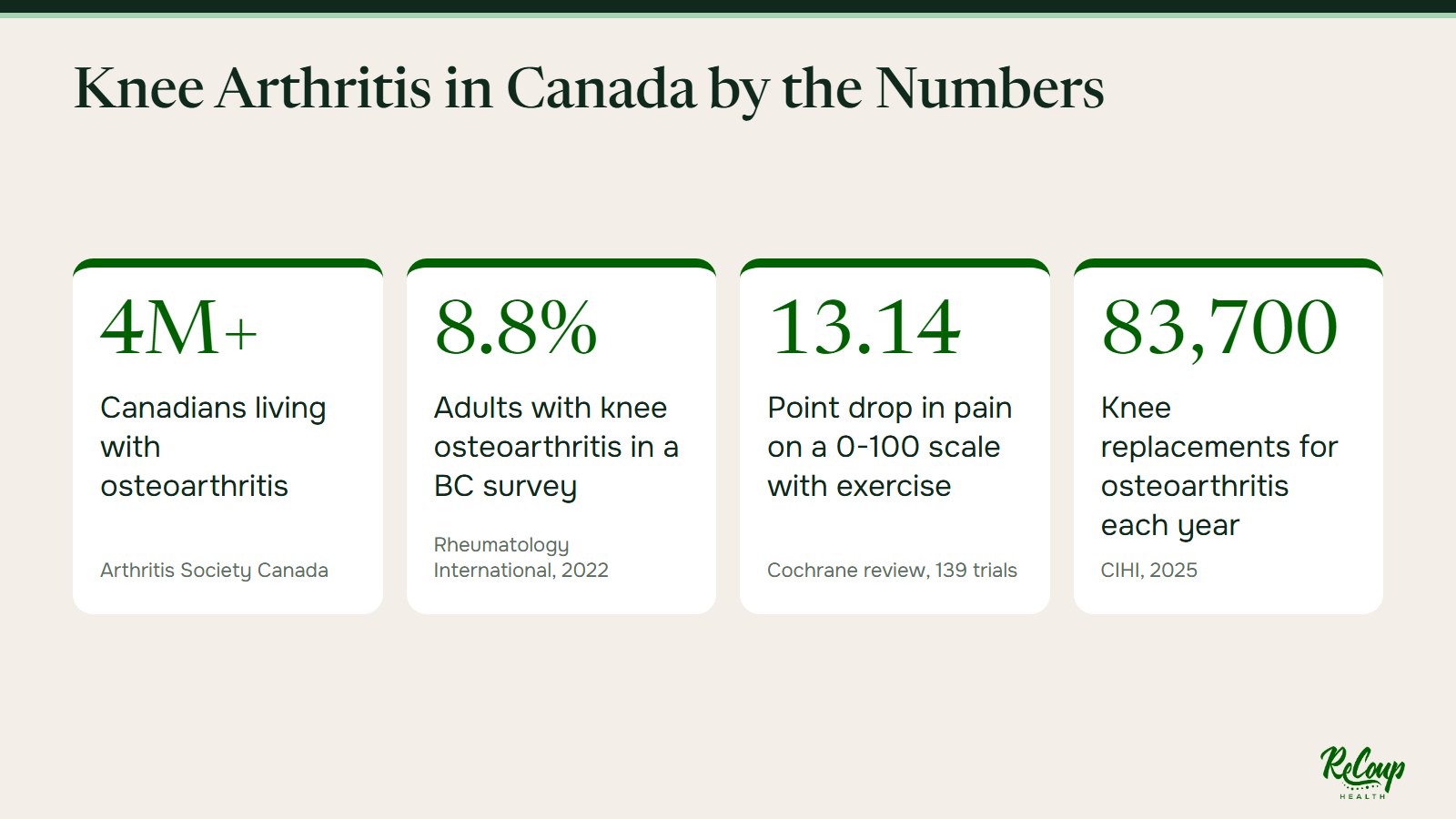
Yes, walking helps knee pain when the pace and distance stay within a level the knee tolerates the next morning. Walking is a land-based exercise, the type tested in the Cochrane reviews on knee osteoarthritis. The 2015 Cochrane review of 54 trials found exercise lowered pain by 12 points on a 0 to 100 scale.
The benefit faded but persisted, at 6 points, two to six months after treatment ended. The updated Cochrane review, with 139 trials and 12,468 participants, found a 13.14-point drop compared with no treatment. Those reviewers set 12 points as the smallest change patients notice, so the effect is real but modest.
Start with 10 to 15 minutes on flat ground and add a few minutes each week. Cycling and swimming suit knees that react to impact. A steady walking habit sets up the wider clinic options that relieve knee pain without surgery.
How Can You Relieve Knee Pain Without Surgery?
You can relieve knee pain without surgery through guided exercise, supportive devices, hands-on care and weight management. The OARSI 2019 guideline places exercise at the centre, with other options added around it. Each one below targets a different part of the problem.
Does Physiotherapy Help Knee Pain?
Physiotherapy helps knee pain by strengthening the thigh and hip muscles that control how the kneecap and joint move. The American Academy of Orthopaedic Surgeons (AAOS) says therapy for front-of-knee pain emphasizes quadriceps and hip strength. AAOS adds that surgery is rarely needed for that condition.
A knee physiotherapy program also tests balance, stair control and squat form. The physiotherapist then raises the load in small steps, which ties strength gains to daily tasks.
Do Knee Braces Help With Knee Pain?
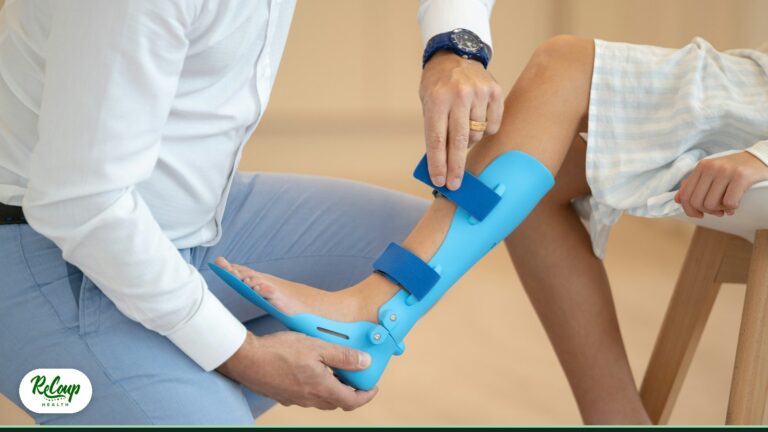
Yes, knee braces help with knee pain for people with osteoarthritis in the main knee joint. The ACR 2019 guideline strongly recommends tibiofemoral bracing for knee osteoarthritis. The same guideline gives kneecap (patellofemoral) bracing only a conditional recommendation.
Braces do not help knee pain from every cause, so the type matters. A knee brace fitting matches the brace style to the painful part of the joint and the activity it supports.
Can a Chiropractor Help With Knee Pain?
Yes, a chiropractor can help with knee pain by mobilizing stiff joints in the knee, hip and ankle and adding guided exercise. Evidence for hands-on treatment alone is limited. The OARSI 2019 guideline names education and structured exercise as core care, so manual therapy serves as an add-on.
A visit for chiropractic knee care starts with movement tests of the whole leg. That wider view matters, because the knee sits between the hip and the foot and absorbs strain from both.
Does Massage Help Knee Pain?
Massage helps knee pain mainly by easing tight thigh, calf and hamstring muscles that pull on the joint. No massage trial appears in the guideline sources reviewed here, so massage sits beside exercise rather than in place of it. Sessions of therapeutic massage can make the next exercise session more comfortable.
Hands-on care eases pain in the short term, while arthritis needs a longer plan built on the same core treatments.
How Do You Relieve Knee Pain From Arthritis?
Relieve knee pain from arthritis with exercise, arthritis education and, for people above a healthy weight, gradual weight loss. The OARSI 2019 guideline names these three as core treatments for knee osteoarthritis. Learning how to relieve knee pain from arthritis matters in Canada, where the condition is widespread.
The Public Health Agency of Canada counted 3.9 million adults, or 13.6%, with diagnosed osteoarthritis in 2016-2017. Arthritis Society Canada now puts the number above 4 million Canadians. A 2022 British Columbia survey in Rheumatology International found the knee was the leading site, at 8.8% of adults.
The graphic below shows these Canadian knee arthritis numbers beside the exercise and surgery figures.
Weight loss adds to the effect of exercise. The IDEA trial in JAMA followed 454 adults aged 55 and over with knee osteoarthritis for 18 months. The diet-plus-exercise group lost 11.4% of body weight and reported less pain than the exercise-only group.
Ongoing arthritic knee care combines these core steps with braces, orthotics or injections where needed. Those injections lead into the newer treatments people search for.
What Is the Newest Treatment for Knee Pain?
The newest treatments for knee pain are injections and nerve-targeted procedures such as platelet-rich plasma, genicular nerve ablation and shockwave therapy. Each knee pain new treatment has a smaller and less consistent evidence base than exercise. The table below compares six options by what the research shows so far.
| Treatment | Main difference | What the research shows | Guideline status |
|---|---|---|---|
| Steroid injection | Calms inflammation inside the joint | Relief can last several weeks or months (NHS) | Strongly recommended (ACR 2019) |
| Hyaluronic acid injection | Adds lubricating gel to the joint fluid | Pain improved 28% to 54% from baseline at 5 to 13 weeks, low-quality trials (Cochrane 2006) | Level 1B or 2 depending on health (OARSI 2019) |
| Platelet-rich plasma (PRP) | Injects a concentrate of your own blood | No clear benefit over a placebo injection at 12 months in 288 adults (JAMA 2021) | Not a core treatment |
| Genicular nerve radiofrequency ablation | Heats the small nerves that carry knee pain signals | Lower pain at 1, 3, 6 and 12 months across 604 patients (Pain Physician 2024) | Conditional (ACR 2019) |
| Extracorporeal shockwave therapy | Sends sound-wave pulses into the tissue | Pain 1.59 points lower at 2 weeks and 1.12 at 6 months across 705 patients (International Orthopaedics 2020) | Small, mixed studies |
| Genicular artery embolization | Blocks small blood vessels feeding an inflamed joint lining | Early studies only | Not rated in ACR 2019 or OARSI 2019 |
The table shows a clear pattern, with steroid injections holding the firmest guideline support among the injections. The cards below summarize four newer options and the size of the studies behind each one.
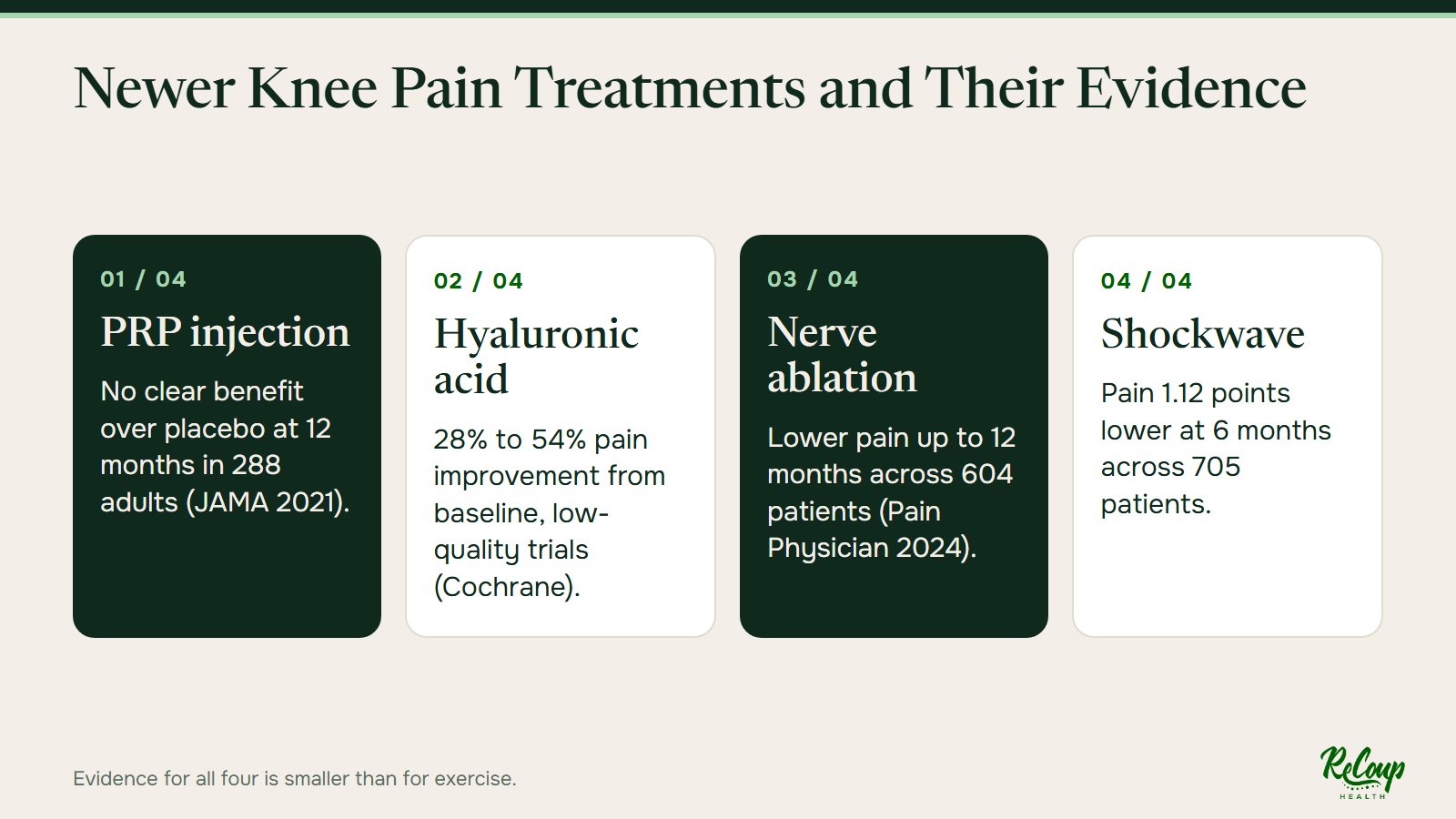
The RESTORE trial in JAMA found PRP did not beat a saline placebo, although other reviews report benefit. A family doctor or orthopaedic specialist decides whether an injection or procedure fits your knee. Strength work still continues alongside any procedure, and the same holds when surgery becomes the next step.
When Is Knee Replacement the Next Step?
Knee replacement becomes the next step when severe arthritis pain limits daily life after exercise, weight management and injections have not worked. The Canadian Institute for Health Information (CIHI) reports about 83,700 knee replacements for osteoarthritis in Canada each year. Total replacements make up 90% of first knee replacements, and partial ones make up 10%.
Patient-reported results are strong, according to CIHI. One year after surgery, 86% of people under 65 and 87% of people 65 and over were satisfied. The NHS states that an artificial joint can last for up to 20 years.
Provincial and territorial governments set a 26-week, or 182-day, wait benchmark for joint replacement in 2005, according to CIHI. That waiting period is a good time for knee replacement rehab that builds strength before and after the operation. Some knee problems cannot wait for any plan, which brings up the urgent warning signs.
When Should Knee Pain Be Seen Urgently?
Knee pain should be seen urgently when the knee cannot bear weight, locks, gives way, or turns red and hot. The NHS lists these signs, plus a knee that changes shape, as reasons for same-day advice. A hot, red knee with a fever can mean a joint infection.
Call 911 or go to the nearest emergency department for these signs:
- A knee that cannot take any weight after a fall, twist or collision.
- A knee that looks deformed or out of place.
- Fever, chills or shivering with a red, hot, swollen knee.
- Calf swelling, warmth or redness in one leg, which the NHS links to a blood clot.
- Leg pain or swelling with chest pain or breathlessness, which the NHS says can signal a clot in the lungs.
For less urgent questions, Health811 connects Ontario residents with a registered nurse by phone. Once red flags are ruled out, a few side questions round out the picture of relieving knee pain.
What Else Should You Know About Relieving Knee Pain?
Relieving knee pain also depends on the situation, from night pain to running, pregnancy and foot shape. The short answers below cover these common side questions.
How Do You Relieve Knee Pain at Night?
Relieve knee pain at night by placing a pillow between the knees when lying on your side. Ice or a warm pack for 15 to 20 minutes before bed also settles the joint. Harvard Health advises seeing a doctor when knee pain wakes you from sleep.
How Do You Relieve Knee Pain From Running?
Relieve knee pain from running by cutting weekly distance, swapping hills for flat routes and adding hip and thigh strength work. AAOS links front-of-knee pain to running, stairs and squatting. A plan for running knee rehab sets a graded return to the weekly distance you ran before.
How Do You Relieve Knee Pain From Flat Feet?
Relieve knee pain from flat feet with supportive shoes and, where needed, foot orthotics that control how the arch collapses. A 2026 review in Health Science Reports found orthotics or physiotherapy each improved knee arthritis pain in 4 trials with 240 people. Properly made custom orthotic insoles are cast from your own feet.
How Do You Relieve Knee Pain During Pregnancy?
Knowing how to relieve knee pain during pregnancy starts with low-impact movement, supportive footwear and short rest breaks with the legs raised. Weight gain and looser ligaments add load to the knees in pregnancy. Talk to your midwife, obstetrician or family doctor before using any pain medication.
Does Compression Help Knee Pain?
Yes, compression helps knee pain linked to swelling by limiting fluid build-up around the joint. A sleeve suits knees that swell after a long day on their feet. A snug sleeve suits mild swelling, while a hot, red knee needs medical care instead.
Can Acupuncture Help With Knee Pain?
Acupuncture can help with knee pain for some people as an add-on to exercise, although trial results vary. Thin needles placed at set points aim to change how pain signals are processed. A clinician on our care team trained in acupuncture and cupping can combine it with other knee care.
Can Knee Pain Come From the Hip or Back?
Yes, knee pain can come from the hip or lower back when an irritated nerve or stiff hip refers pain. Pain that changes with back or hip movement, rather than knee movement, points to that source. A physiotherapist checks the hip and spine during a knee assessment for this reason.
Frequently Asked Questions About Relieving Knee Pain
Does Arthritis in the Knee Ever Go Away?
No, arthritis in the knee does not go away, because the cartilage changes are permanent. Pain and function can still improve a great deal with exercise and weight management, according to the OARSI 2019 guideline.
What Vitamin Am I Lacking If My Knee Hurts?
No single vitamin deficiency explains knee pain. A family doctor can order blood tests when diet or absorption is a concern, and a naturopathic doctor can review overall nutrition.
What Pain Relievers Help Knee Pain?
Anti-inflammatory gels and tablets help knee arthritis pain, and the ACR 2019 guideline strongly recommends both. Ask a pharmacist or family doctor to confirm which one is safe for you.
What Helps Knee Pain in Older Age?
Strength training, walking, balance work and weight management help knee pain in older age. Knee arthritis is common later in life, with 33% of people over 75 affected, according to a 2021 JAMA review.
What Exercise Gives Instant Relief From Knee Pain?
Gentle knee bending and straightening while seated gives quick relief by moving joint fluid. Lasting relief comes from strength work done two or three times a week for several weeks.
How Long Does Knee Pain Take to Settle?
Minor knee pain from a strain settles within a few days, according to the NHS. Pain that is not improving within a few weeks needs an assessment from a physiotherapist or family doctor.
How Does Recoup Health Help Relieve Knee Pain?
Recoup Health helps relieve knee pain by combining physiotherapy, chiropractic care, massage therapy, bracing and orthotics under one roof. A first visit starts with a sore knee assessment of the joint, the hip and the foot. The findings shape a plan that grows strength in stages and tracks pain week by week.
Our team uses the same core treatments the OARSI and ACR guidelines support, with exercise at the centre. Patients aiming for lasting knee relief also learn how to manage flares at home between visits. No doctor’s referral is needed to start care.
Our clinic sits on Innovation Drive in Vaughan, close to home for many local families. The Recoup Health practitioners include physiotherapists, a chiropractor, registered massage therapists and a naturopathic doctor. They share notes so each part of the plan fits together.
Booking a first visit takes a few minutes by phone or online. Questions about knee pain, bracing or orthotics are welcome, and you can contact the clinic before deciding on care.