
Spinal stenosis is a narrowing of spaces inside the spine that can squeeze the spinal cord or its nerves. Up to 95% of people show degenerative spine change by age 50, according to Cleveland Clinic. Narrowing alone can be quite painless. Symptoms start when nerves get pressed, causing pain, numbness, tingling or weakness in the back, neck, legs or arms.
Key Takeaways
- Spinal stenosis means less room in the spinal canal or the side tunnels where nerves exit.
- Lumbar stenosis affects the lower back and legs, while cervical stenosis affects the neck, arms and hands.
- Leg pain that builds with standing or walking and eases with sitting or bending forward is the classic lumbar pattern.
- Scans show narrowing in many people with no symptoms, so a diagnosis rests on symptoms plus an exam.
- Bladder or bowel changes, saddle numbness or new leg weakness need urgent care at an emergency department.
What Is Spinal Stenosis in Simple Terms
Spinal stenosis is a narrowing of the bony tunnel that carries your spinal cord and nerve roots. The National Institute of Arthritis and Musculoskeletal and Skin Diseases (NIAMS) defines it as a narrowing of the spinal canal. A narrower canal leaves less space for the nerves inside it. Pressure on those nerves, not the narrowing itself, is what creates symptoms.
The plain answer to what is spinal stenosis depends on which tunnel narrows. The spine has two kinds of tunnels. The central canal is the main channel that holds the spinal cord and the bundle of nerves below it. The foramina are small side openings where each nerve root exits the spine. Hospital for Special Surgery (HSS) calls these central stenosis and foraminal stenosis.
Foraminal narrowing affects the single nerve root passing through that opening, according to HSS. Central narrowing can press on several nerves at once and affect both legs. A spinal stenosis assessment sorts out which tunnel is involved and which nerves are irritated. That tunnel picture leads straight into the type of stenosis tied to ageing.
What Is Degenerative Spinal Stenosis
Degenerative spinal stenosis is narrowing caused by age-related wear in the discs, joints and ligaments of the spine. Cleveland Clinic calls this acquired stenosis and states that only 9% of cases come from congenital causes. Acquired, wear-related stenosis is far more common than stenosis a person is born with.
Congenital stenosis means a person is born with a small spinal canal, according to NIAMS. AAOS OrthoInfo, from the American Academy of Orthopaedic Surgeons, dates first symptoms to about ages 30 to 50. Wear and birth shape are two routes, and the next section lists the specific causes behind them.
What Is the Cause of Spinal Stenosis
The cause of spinal stenosis is anything that takes up room in the spinal canal, with age-related change leading the list. NIAMS names ageing as the most common cause of spinal stenosis. Bone spurs, bulging discs and thickened ligaments are the main space-stealers. Cleveland Clinic and HSS describe these causes:
- Bone spurs from spinal arthritis that grow into the canal.
- Discs that dry out, flatten or bulge backward, including a herniated spinal disc.
- Ligaments that thicken and fold into the canal over time.
- One vertebra slipping forward on the one below it.
- Spinal fractures or injuries that shift bone into the canal.
- Cysts or tumours inside or beside the spinal canal, which are rare.
- A narrow canal from birth (congenital stenosis).
Several causes can stack at one spinal level. Arthritis sits at the top of this list, which raises the next question about how the two conditions connect.
Is Spinal Stenosis a Form of Arthritis
Spinal stenosis is not a form of arthritis, but arthritis is a leading cause of spinal stenosis. AAOS OrthoInfo states that arthritis is the most common cause of the condition. Stenosis is the narrowing, and arthritis is one process that produces it.
Osteoarthritis wears down the cartilage in the small facet joints at the back of the spine. Joint wear triggers bone growth, and those bone spurs crowd the nerves. Care for spinal osteoarthritis and care for stenosis overlap for that reason. Arthritis builds with age, so age is the next factor to look at.
Who Gets Spinal Stenosis and at What Age
Spinal stenosis can affect anyone, and the odds rise with age, according to NIAMS. Cleveland Clinic reports the condition is most common after age 50, while AAOS OrthoInfo says it happens most often after 60. The odds of narrowing climb steeply after age 50.
Imaging studies show how steeply narrowing climbs with age. A CT study of 191 Framingham Heart Study participants, published in the Spine Journal in 2009, measured canal width. Relative stenosis rose from 20.0% under age 40 to 47.2% at ages 60 to 69. Absolute stenosis, the tighter grade, rose from 4.0% to 19.4% over the same ages.
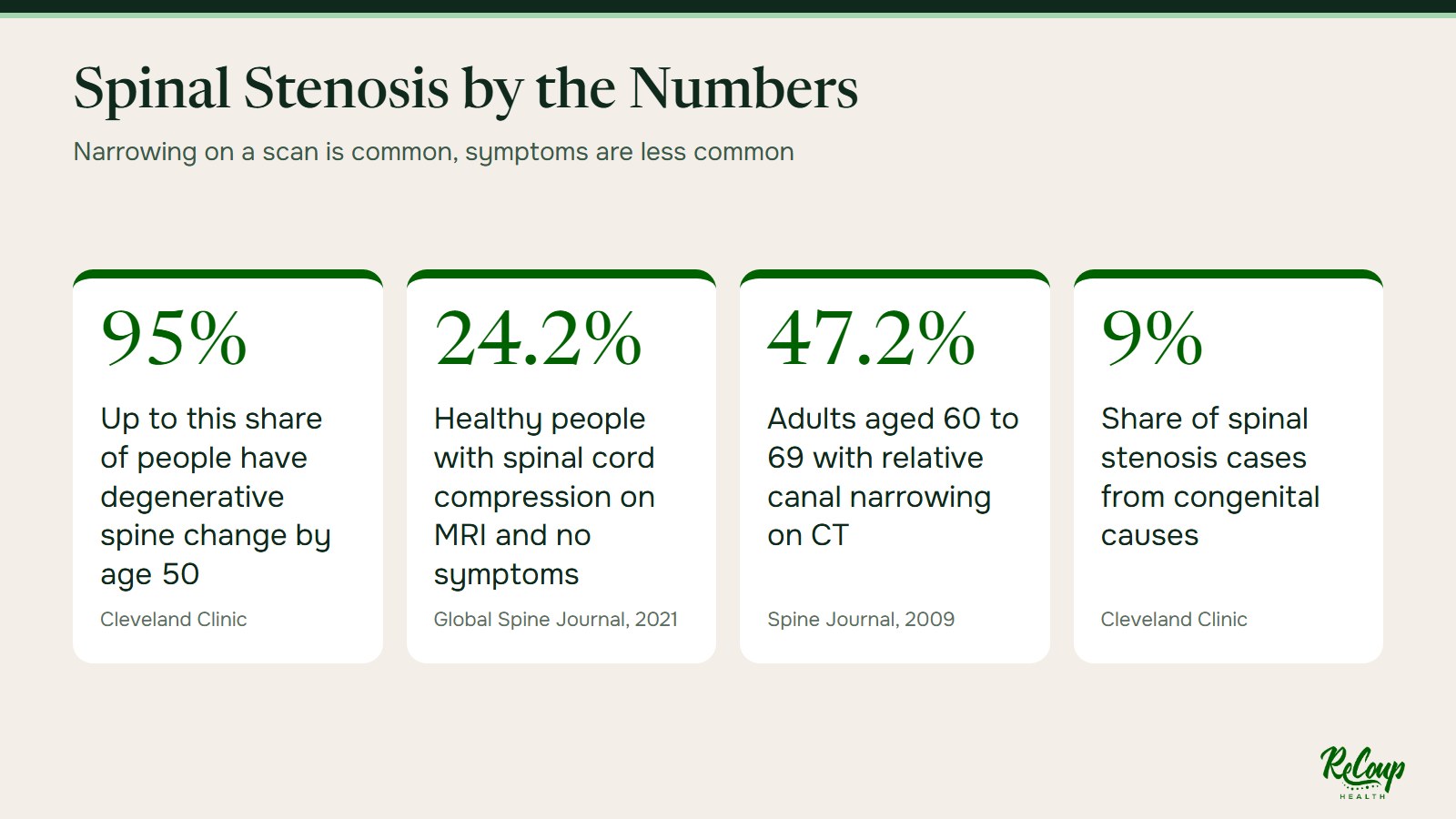
The graphic above sums up the key spinal stenosis statistics by age and imaging. Cleveland Clinic adds that lumbar stenosis is the most common diagnosis in people over 65 having spine surgery. Age raises the odds of narrowing, and the symptoms below show when that narrowing starts to matter.
What Are the Symptoms of Spinal Stenosis
The symptoms of spinal stenosis are pain, numbness, tingling and weakness below the narrowed level of the spine. NIAMS states that symptoms depend on where the narrowing sits and progress slowly for most people. Some people with clear narrowing on a scan have no symptoms at all.
The answer to what are the signs of spinal stenosis changes with the region of the spine involved. The table below compares the three regions.
| Region | Where symptoms appear | Typical symptoms | Warning sign |
|---|---|---|---|
| Lumbar (lower back, 5 vertebrae) | Buttocks, legs and feet | Burning or aching leg pain, heaviness, cramping, numbness | Bladder or bowel change, saddle numbness |
| Cervical (neck, 7 vertebrae) | Neck, arms, hands, sometimes legs | Neck pain, arm tingling, hand weakness | Clumsy hands, poor balance |
| Thoracic (mid-back, rare) | Trunk and legs | Mid-back pain, leg numbness or weakness | Trouble walking |
Regional patterns in the table come from NIAMS and Cleveland Clinic. The lower back comes first, since lumbar narrowing leads the surgery figures from Cleveland Clinic.
What Is Lumbar Spinal Stenosis
Lumbar spinal stenosis is narrowing in the five vertebrae of the lower back that presses on the nerves to the legs. Cleveland Clinic lists low back pain, pain from the buttock down the leg, leg heaviness and pins and needles. Leg pain that worsens with standing or walking and eases with sitting is the hallmark.
AAOS OrthoInfo reports that walking more than 1 or 2 blocks may bring on severe leg pain or weakness. Leaning on a shopping cart or riding a stationary bike can be easier, according to the same source. HSS names lumbar stenosis as one of the chief causes of sciatic leg pain.
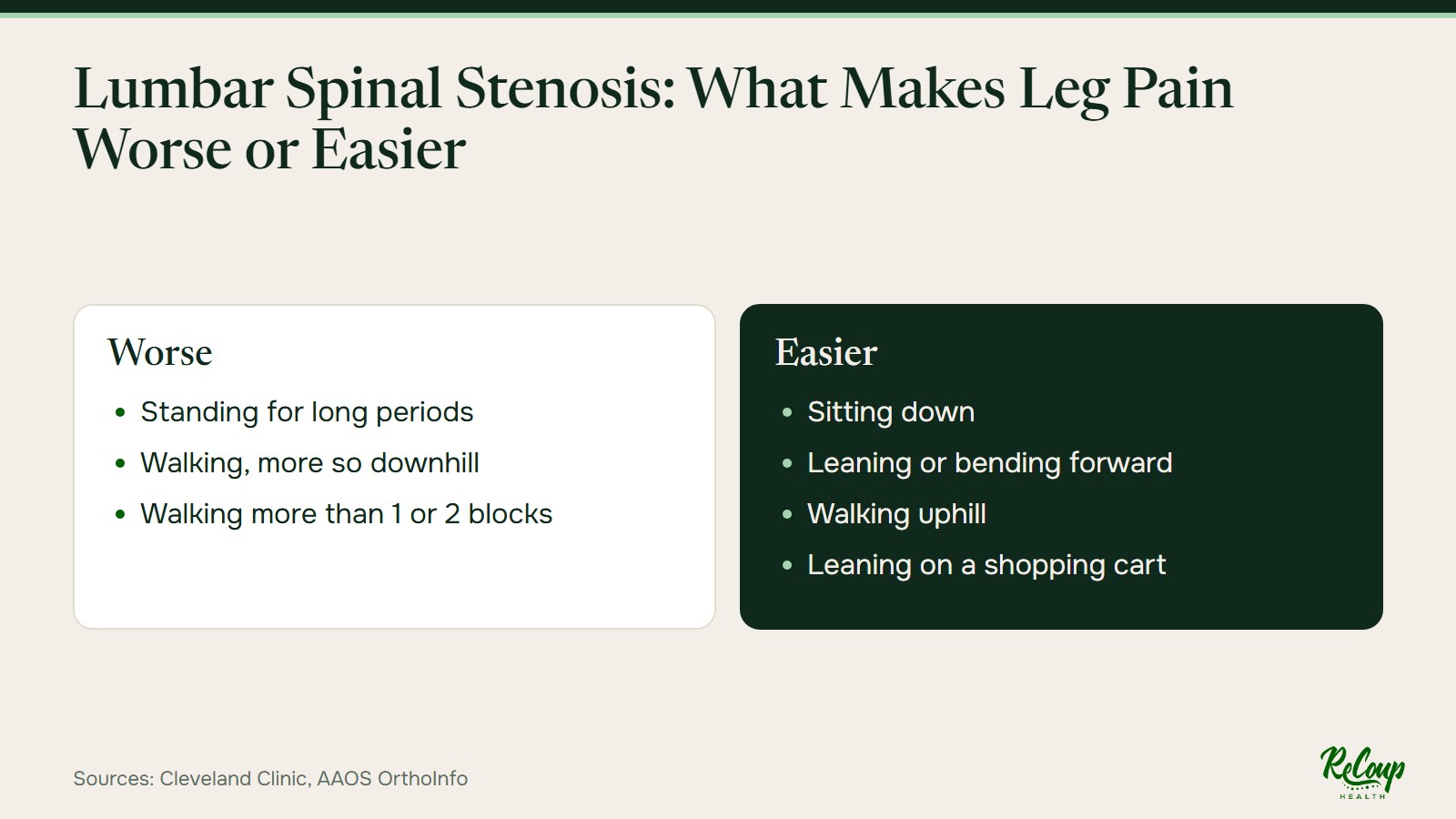
The comparison graphic above shows which positions make lumbar stenosis leg pain worse or easier. Bending forward opens the canal slightly, while standing tall closes it. The neck follows its own pattern, covered next.
What Is Cervical Spinal Stenosis
Cervical spinal stenosis is narrowing in the seven vertebrae of the neck that can press on the spinal cord or arm nerves. NIAMS lists neck pain, numbness or tingling into the arms and hands, and hand or arm weakness. Clumsy hands and poor balance point to pressure on the spinal cord itself.
Cleveland Clinic gives examples such as trouble writing or doing up shirt buttons. Spinal cord pressure in the neck can also affect the legs, according to Cleveland Clinic. Neck pain alone, without arm or hand symptoms, is not usually from stenosis, according to NHS inform. The mid-back sits between these two regions and is rarely involved.
What Is Thoracic Spinal Stenosis
Thoracic spinal stenosis is narrowing in the mid-back, and Cleveland Clinic describes it as rare. HSS notes the thoracic spine supports the rib cage and moves less than the neck or lower back. Thoracic narrowing can cause mid-back pain and leg numbness or weakness.
Muscle and joint strain also cause mid-back pain, so nerve signs matter. A health professional checks reflexes, sensation and strength to tell the two apart. The way stenosis pain feels is a strong clue as well.
What Does Spinal Stenosis Pain Feel Like
Spinal stenosis pain feels like a dull ache, tenderness, or an electric or burning sensation, according to Cleveland Clinic. The pain can come and go. Cleveland Clinic also lists a heavy feeling in the legs that can lead to cramping.
Lumbar stenosis pain starts in the buttocks and can extend down the leg into the foot, per Cleveland Clinic. Cervical stenosis pain sits in the neck and can run into the arm and hand. Leg cramping during walking is so typical that the mechanism deserves its own answer.
Why Does Spinal Stenosis Cause Leg Pain and Cramps
Spinal stenosis causes leg pain and cramps because squeezed nerves in a tight canal get irritated when the spine straightens. Standing and walking narrow the lumbar canal a little more. Nerves under that extra pressure send pain, heaviness and cramping into the legs.
Clinicians call this pattern neurogenic claudication, meaning walking-related leg pain that starts in the nerves. Narrowed leg arteries can cause a similar walking pain. AAOS OrthoInfo notes that leaning forward or sitting relieves stenosis symptoms, which helps tell the two apart. Leg pain is the common symptom, yet a short list of severe symptoms matters far more.
What Are the Worst Symptoms of Spinal Stenosis
The worst symptoms of spinal stenosis are loss of bladder or bowel control, numbness in the saddle area and progressive leg weakness. NIAMS states that more severe cases may affect bowel, bladder or sexual function. These symptoms can signal cauda equina syndrome, a rare emergency that may need surgery.
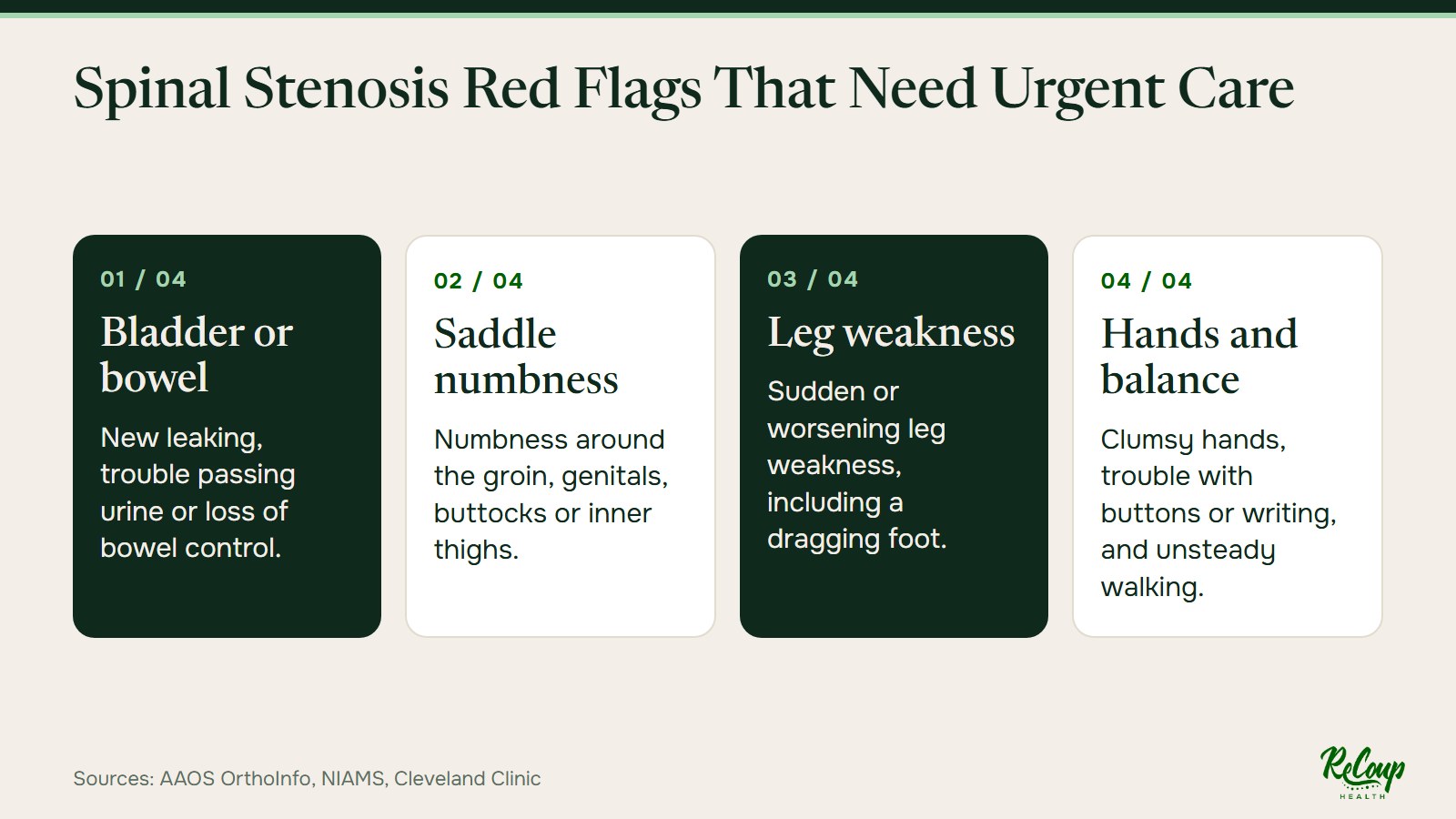
The red flag cards above show four groups of urgent spinal stenosis symptoms. Go to the nearest emergency department or call 911 for any of these:
- New trouble passing urine, leaking urine or loss of bowel control.
- Numbness around the groin, genitals, buttocks or inner thighs.
- New or worsening weakness in one or both legs, or a foot that drags.
- Sudden clumsy hands, trouble walking or loss of balance.
Cauda equina syndrome is uncommon. A Scottish population study in Neuroepidemiology (2022) found a rate of about 2.7 cases per 100,000 people per year. Any new bowel or bladder change with back pain needs same-day medical review. Outside these emergencies, stenosis is confirmed through a planned assessment.
How Is Spinal Stenosis Diagnosed
Spinal stenosis is diagnosed through a symptom history and physical exam, with imaging added when needed. Cleveland Clinic lists X-ray, MRI and CT myelogram as the main imaging tests. The exam matters as much as the scan, because narrowing on imaging is common in people without pain.
A 2021 Global Spine Journal analysis of 19 studies found silent cord compression on MRI in about 24.2% of healthy people. Only about 2.3% of that group had the cord condition called degenerative cervical myelopathy. NHS inform adds that back pain without leg symptoms is not usually caused by stenosis. Plain lumbar back pain has a different plan of care.
A family doctor orders MRI or CT in Ontario. Imaging reports use grading words, explained next.
What Is Severe Spinal Stenosis on a Scan Report
Severe spinal stenosis on a scan report means the canal or exit tunnel has lost a large share of its normal space. Radiologists grade narrowing as mild, moderate or severe based on how much the nerves are crowded. A grade describes the picture, not how much a person hurts.
Imaging grades and symptoms can disagree, as the Global Spine Journal figures above show. The Framingham CT study above found absolute stenosis in 19.4% of adults aged 60 to 69. Grades guide decisions, while symptom change over time shows whether the condition is moving.
How Quickly Does Spinal Stenosis Get Worse
Spinal stenosis gets worse slowly for most people, according to NIAMS. NHS inform adds that slow progression leaves time to monitor symptoms and plan treatment. Nerves can learn to cope with a narrower tunnel, according to NHS inform.
Sudden change is different and calls for prompt review. Fast-rising weakness, new hand clumsiness or any red flag above needs medical care the same day. Steady symptoms leave room for a planned approach, and the next section covers the wider questions people ask.
What Else Should You Know About Spinal Stenosis
Spinal stenosis raises practical questions about treatment, walking, surgery and diet. The short answers below cover the topics people ask about after a diagnosis.
What Treatment Works for Spinal Stenosis
Treatment for spinal stenosis starts with exercise-based physiotherapy, activity changes and pain relief, with surgery saved for cases that do not improve. Cleveland Clinic states that most people with spinal stenosis do not need surgery. Exercise therapy matched surgery on physical function at 2 years in one major trial.
The Delitto trial in the Annals of Internal Medicine (2015) followed 169 adults aged 50 or older. Physical function improved by 22.4 points with surgery and 19.2 points with physical therapy, with no significant difference. In that trial, 57% of the therapy group later chose surgery. A 2021 trial in Clinical Rehabilitation found meaningful improvement in 60.5% with supervised physiotherapy versus 32.6% with home exercise.
Evidence limits are real. A Cochrane review of 21 trials and 1,851 people found moderate and high-quality evidence for non-surgical care lacking. Hands-on options such as chiropractic spine care sit within an exercise-led plan.
Is Walking Good or Bad for Spinal Stenosis
Walking is good for spinal stenosis when symptoms stay manageable, according to NHS inform. NHS inform encourages short, regular walks with rest breaks. Sitting or leaning forward during a break lets the nerves settle. AAOS OrthoInfo adds that a shopping cart or a stationary bike can extend activity time. A physiotherapist sets walking targets within stenosis rehab plans.
What Should You Not Do With Spinal Stenosis
People with spinal stenosis should not stay in bed or stop moving, and should limit long standing spells. NHS inform recommends staying active and pacing tasks. Paced, regular movement keeps walking tolerance up. Ignoring red flag symptoms is the one mistake that carries real danger.
Do You Need Surgery for Spinal Stenosis
Most people do not need surgery for spinal stenosis, according to Cleveland Clinic. A Cochrane review of 5 trials and 643 people could not show whether surgery or non-surgical care is better. Surgical groups had side effects in 10% to 24% of cases. AAOS OrthoInfo says normal activities resume about 2 to 3 months after a laminectomy, and laminectomy rehab supports that return.
What Foods Should You Avoid With Spinal Stenosis
No specific food causes or reverses spinal stenosis, and no trial has shown that cutting one food changes the narrowing. Cleveland Clinic advises a healthy weight, enough calcium and not smoking for spine health. Overall eating pattern matters more than any single food. Our naturopathic diet guidance can help shape a plan around weight and bone health.
Frequently Asked Questions About Spinal Stenosis
Can Spinal Stenosis Be Reversed
Spinal stenosis cannot be reversed without surgery, because exercise does not widen the canal, according to NHS inform. Symptoms can still improve a great deal. Surgery widens the space but carries risks.
Can Spinal Stenosis Kill You
Spinal stenosis is not a fatal condition on its own. Rare complications such as cauda equina syndrome can cause permanent damage or disability, according to NHS inform. Prompt care for red flags limits that risk.
Is Spinal Stenosis a Disability
Spinal stenosis counts as a disability only when it limits daily function enough to meet a program’s rules. Eligibility in Canada depends on documented function, not the diagnosis alone.
Where Does Spinal Stenosis Hurt the Most
Lumbar spinal stenosis hurts mainly in the buttocks and legs, according to HSS. Cervical stenosis hurts mainly in the neck and arms. Back pain alone is less typical.
How Recoup Health Helps With Spinal Stenosis
Recoup Health helps people with spinal stenosis through assessment, exercise-based physiotherapy and hands-on care. Knowing what is spinal stenosis and how it behaves turns a scary scan report into a clear plan. Our team builds walking tolerance, strength and confidence step by step.
Physiotherapists, a chiropractor and registered massage therapists work together on our spine clinicians roster. No doctor’s referral is needed to start physiotherapy. We work alongside your family doctor and refer back for imaging or a specialist opinion when symptoms call for it.
The first visit covers your symptoms, a nerve and movement exam and a home program you can start that week. Questions about timing or fit go through our page to contact our physiotherapists.
People across Vaughan and nearby communities come to us for spine care built around daily life. Knowing the warning signs and staying active are the two habits that protect the spine. Spine care at Recoup Health physio follows those habits from the first visit onward.