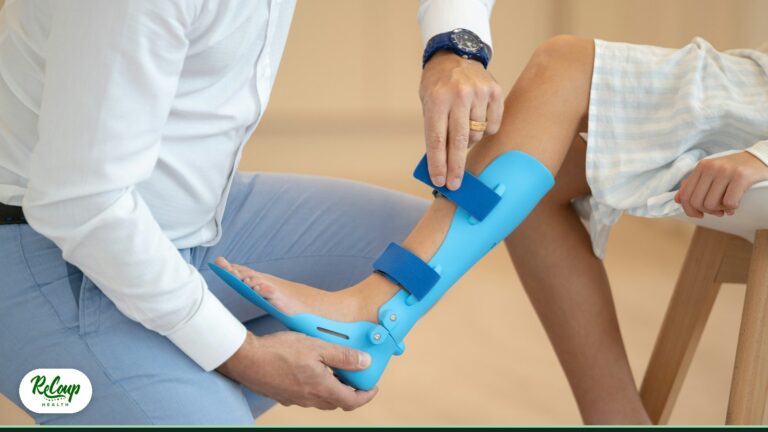

Tennis elbow is an overuse injury of the tendon that joins the forearm muscles to the bony bump on the outer elbow. The medical name is lateral epicondylitis. Tennis elbow affects an estimated 1-3% of adults each year, per a 2019 Journal of Orthopaedics review. Treatment starts with rest, load changes and physiotherapy. The American Academy of Orthopaedic Surgeons (AAOS) reports 80 to 95% success without surgery.
Key Takeaways
- Tennis elbow is outer elbow tendon overload, and Cleveland Clinic says more than 9 in 10 cases are not from tennis.
- Repeated gripping, twisting and wrist lifting at work or play cause the tendon damage.
- Key signs are outer elbow pain, a weak grip and pain with doorknobs, jars and handshakes.
- Cleveland Clinic says recovery takes around 6 months, and up to 18 months for some people.
- AAOS reports 80 to 95% success with nonsurgical treatment, and surgery is considered only after 6 to 12 months.
What Is Tennis Elbow and Why Does It Hurt?
Tennis elbow is a painful overload of the tendon that attaches the wrist extensor muscles to the outer elbow. The tendon breaks down from repeated gripping and wrist lifting faster than it can repair. The Canadian Centre for Occupational Health and Safety (CCOHS) calls the condition a tendinopathy, meaning a disorder of a tendon.
The tendon belongs mainly to the extensor carpi radialis brevis (ECRB), a muscle that steadies the wrist when you grip. The ECRB tendon anchors to the lateral epicondyle, a small bony bump on the outside of the upper arm bone. Pain at this exact spot is the hallmark of lateral epicondyle pain from tendon overload. That spot also explains the medical name and the popular one.
Why Is Tennis Elbow Called That?
Tennis elbow is called that because the condition is common among tennis players, according to Cleveland Clinic. The name stuck, yet more than 9 in 10 people develop it for reasons other than tennis, per Cleveland Clinic. Painters, plumbers, cooks and office workers get the same tendon injury.
Tennis still carries a real risk for regular players. A 2019 Journal of Orthopaedics review cites older research in which 40-50% of regular tennis players developed symptoms. The medical name, lateral epicondylitis, describes the location rather than the sport. That name also hints at inflammation, which is only part of the story.
Is Tennis Elbow Inflammation or Tendon Damage?
Tennis elbow is mainly tendon damage, not ongoing inflammation, despite the “-itis” ending in its medical name. Hospital for Special Surgery (HSS) explains that strain gradually pulls the tendon from the bone and causes microscopic tears. CCOHS adds that overloaded tendons become thickened, bumpy and irregular over time.
HSS notes that the pain mechanism is still not well understood. Some people show tendon changes on a magnetic resonance imaging (MRI) scan with no pain at all. Tendon changes alone do not explain every case, which points to the role of daily load and activity.
What Is the Cause of Tennis Elbow?
The cause of tennis elbow is repeated gripping, twisting and wrist lifting that overloads the forearm extensor tendon. Small amounts of force for too long, or too much force at once, can both trigger it, according to CCOHS. Tasks done with constant repetition, in awkward positions and without rest raise that load further.
CCOHS and Cleveland Clinic name these common triggers:
- Using plumbing tools or driving screws
- Painting walls and ceilings
- Cutting food, especially meat
- Repetitive computer mouse use
- Racquet and other sports that swing or twist the arm
A sudden blow or single heavy effort can also start the problem, though Cleveland Clinic says this is less common. Workers whose pain began on the job can get help through care for work-related arm strain at a clinic. Job load matters, and personal risk factors matter too.
Who Gets Tennis Elbow?
Tennis elbow mainly affects adults in mid-life who use their arms hard at work or play. The NHS says tennis elbow is more common in people aged 35 to 54. A 2006 American Journal of Epidemiology study of 4,783 Finnish adults aged 30 to 64 found a prevalence of 1.3%.
That Finnish study also linked the condition to smoking, obesity, repetitive movements and forceful work. Cleveland Clinic adds two more risk factors: being over 40 and regularly lifting more than 22 kg. The graphic below shows four key tennis elbow numbers from these sources.
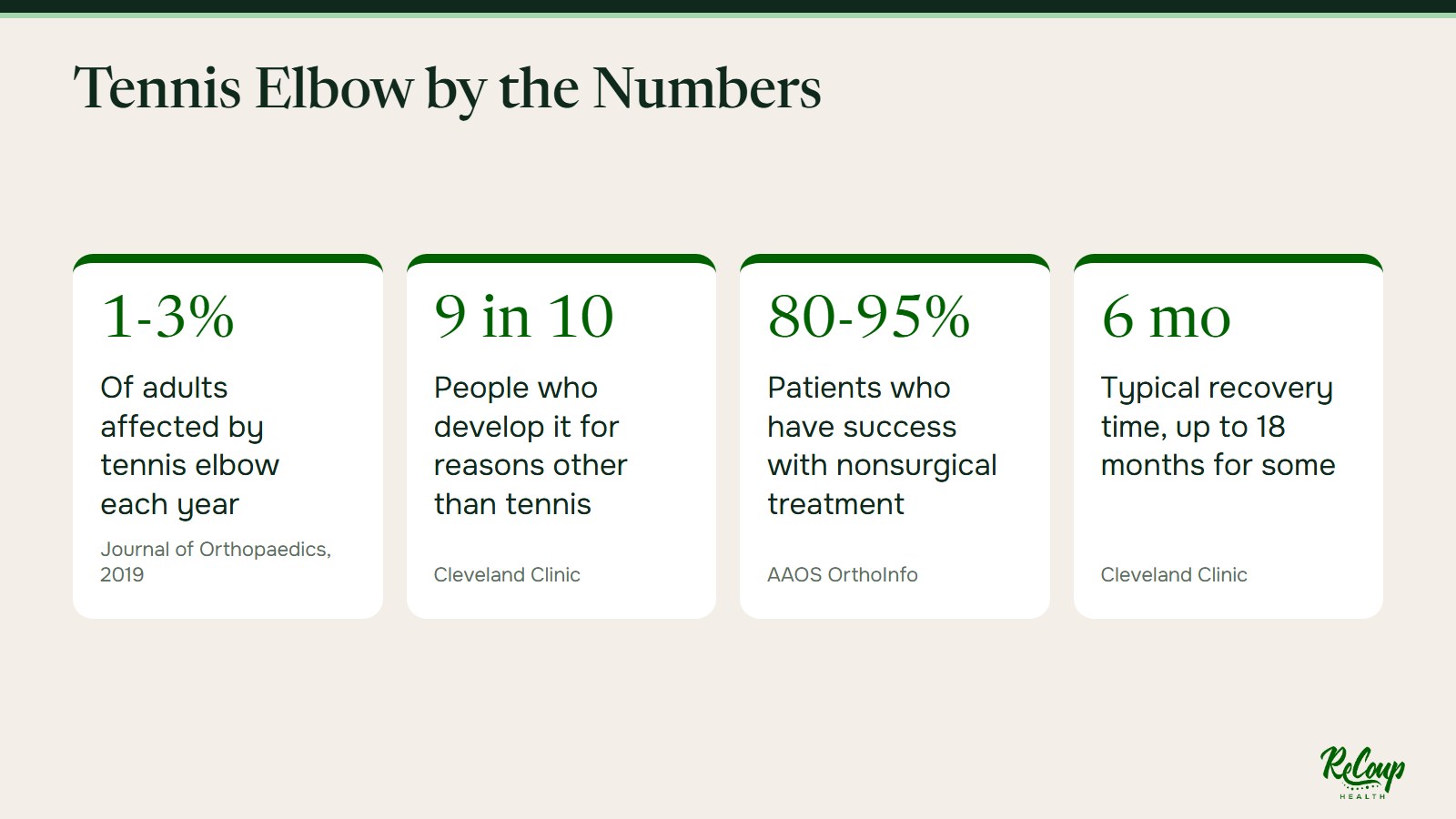
These risk factors shape how the condition shows up in daily life. Daily life is also where the first symptoms appear.
What Are the Symptoms of Tennis Elbow?
The symptoms of tennis elbow are outer elbow pain, a weak grip and pain that spreads down the forearm. Cleveland Clinic describes the pain as sharp or burning, and worse when you twist or bend the arm. Stiffness and mild swelling can occur, while CCOHS notes there is no outward redness in typical cases.
Everyday tasks reveal the problem first. Pain flares when you turn a doorknob, open a jar, shake hands or lift a coffee cup. CCOHS states that tennis elbow tends to affect one arm, the arm that does more of the work. The graphic below sums up four signs of tennis elbow.
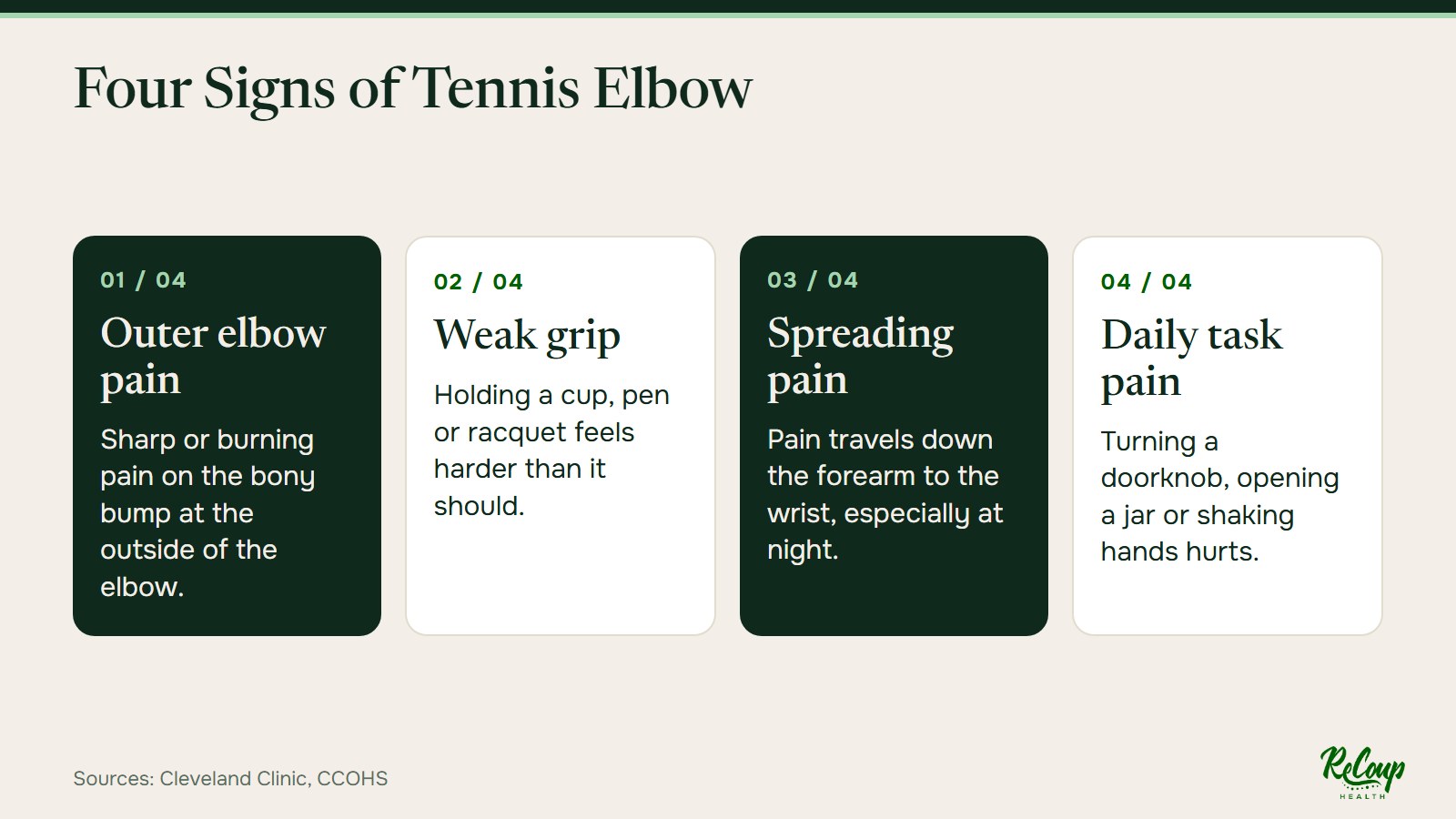
These four signs help you describe your pain to a clinician. A clear description starts with exactly where the elbow hurts.
Where Does Tennis Elbow Hurt?
Tennis elbow hurts at the bony bump on the outer elbow, where the forearm muscles start. Pressing on the lateral epicondyle brings on the pain, according to PhysioExtra, a Canadian clinic group. The pain can travel down the forearm to the wrist and the back of the hand, per Cleveland Clinic.
Pain on the inner elbow points to a different tendon problem. Inner elbow pain from medial elbow tendinopathy is called golfer’s elbow. Location separates the two conditions, and the timing of the pain adds another clue.
Why Is Tennis Elbow Worse at Night?
Tennis elbow can feel worse at night, and Cleveland Clinic notes the pain spreads into the forearm and wrist, especially at night. Pain bad enough to affect your sleep is a reason to see a provider, per Cleveland Clinic. The exact cause of night pain is not well studied.
A full day of gripping and a bent elbow during sleep may both load the sore tendon. Night pain, grip loss and the pain location all feed into a clinical diagnosis.
How Is Tennis Elbow Diagnosed?
Tennis elbow is diagnosed with a hands-on physical exam and a history of your symptoms. Imaging is kept for unclear cases or to rule out other problems, according to HSS. A clinician checks for tennis elbow in four steps:
- Asks when the pain started and which tasks make it better or worse.
- Presses on the lateral epicondyle to find the tender spot.
- Tests resisted wrist and finger straightening with the elbow straight.
- Checks grip strength, neck movement and nearby nerves to rule out other sources.
CCOHS states that pain in any three of four resisted movements can indicate tennis elbow. Cleveland Clinic lists X-ray, ultrasound, MRI and electromyography (EMG) as possible tests. A physiotherapy elbow exam follows these same steps. That exam also screens for look-alike conditions.
What Could Be Mistaken for Tennis Elbow?
Several conditions could be mistaken for tennis elbow because they cause pain near the outer elbow or forearm. Golfer’s elbow, a pinched nerve in the neck, radial nerve compression and elbow arthritis are the main look-alikes. HSS notes that MRI helps rule out nerve compression and, rarely, a tumour.
A bulging disc in the neck can press on a nerve root and send pain down the whole arm. Neck pain, arm tingling or numbness alongside elbow pain suggests a bulging neck disc rather than a tendon problem. That pattern needs a different treatment plan from tennis elbow.
Joint stiffness, grinding and lost elbow motion point to joint wear instead of tendon overload. Those signs fit elbow joint arthritis more closely. Golfer’s elbow remains the closest match to tennis elbow.
The table below answers what is the difference between tennis elbow and golfer’s elbow, with pain location as the main difference.
| Feature | Tennis Elbow | Golfer’s Elbow |
|---|---|---|
| Pain location | Outer elbow (lateral epicondyle) | Inner elbow (medial epicondyle) |
| Medical name | Lateral epicondylitis | Medial epicondylitis |
| Muscles involved | Wrist extensors that lift the hand back | Wrist flexors that bend the hand forward |
| Painful movements | Lifting the wrist, gripping, turning a doorknob | Bending the wrist, gripping, throwing |
| Prevalence (Finnish adults aged 30-64) | 1.3% | 0.4% |
Tennis elbow was more than 3 times as common as golfer’s elbow in the 2006 Finnish study. A clear diagnosis is the starting point for treatment.
What Is Tennis Elbow Treatment?
Tennis elbow treatment is a stepwise plan of activity changes, tendon-loading exercise and time, with injections or surgery kept for stubborn cases. AAOS reports that 80 to 95% of patients have success with nonsurgical treatment. Ice, pain-relief gels and a forearm strap ease symptoms along the way.
The 2006 Bisset trial in the BMJ compared three approaches in 198 adults with tennis elbow. At 6 weeks, success was 78% with a corticosteroid injection, a strong anti-inflammatory shot. Success at 6 weeks was 65% with physiotherapy and 27% with wait and see.
By 52 weeks, the Bisset results flipped. Physiotherapy reached 94% success, wait and see reached 90% and injection reached only 68%. The injection group also had 72% recurrence, versus 8% after physiotherapy.
A 2013 JAMA trial of 165 adults found the same pattern. Recovery at 1 year was 83% after corticosteroid injection and 96% after placebo injection. These trials explain why elbow tendon care now starts with load changes and time. Time alone also does a lot of the work.
Will Tennis Elbow Go Away by Itself?
Yes, tennis elbow can go away by itself, though recovery can take a year or more. The NHS states that tennis elbow goes away with rest but can sometimes last over a year. Wait and see reached 90% success at 52 weeks in the Bisset trial.
Natural recovery has limits. A 2022 Journal of Orthopaedic and Sports Physical Therapy (JOSPT) guideline warns that lateral elbow tendinopathy tends to recur. The same guideline links the condition to lengthy time off work. Physiotherapy beat wait and see at 6 weeks in the Bisset trial, 65% versus 27%. Faster early relief leads to the practical question of how to fix it.
How Do You Fix a Tennis Elbow?
Fix a tennis elbow by easing the tasks that provoke pain, then rebuilding forearm and grip strength step by step. Gradual stretching and strengthening of the forearm muscles is a core treatment listed by CCOHS. The NHS suggests physiotherapy when 6 weeks of home treatment have not helped.
Grip and technique changes matter too. Cleveland Clinic recommends checking how you hold tools, rackets and golf clubs. Players who need stroke and training-load changes can work with tennis player physiotherapy on a graded return.
Hands-on care adds short-term comfort for sore forearm muscles. A 2024 Cochrane review of 23 trials with 1,612 people found manual therapy and exercise gave small benefits that were not sustained. Sessions of forearm muscle massage can ease muscle tension, but the evidence for lasting change is low certainty. Surgery enters the picture only when months of conservative care fail.
What Is Tennis Elbow Surgery?
Tennis elbow surgery is a procedure that removes damaged tendon tissue and reattaches healthy tendon to the bone. AAOS says surgery is considered after 6 to 12 months of nonsurgical treatments without relief. AAOS reports that surgery is successful in 80 to 90% of patients.
HSS describes two methods, open surgery through a larger cut and arthroscopy through two small cuts. Return to sport takes 4 to 6 months after surgery, per AAOS. Recovery after either method relies on post-surgical elbow rehab to restore motion and strength. Cleveland Clinic calls the need for surgery very rare.
What Else Should You Know About Tennis Elbow?
Is Tennis Elbow a Serious Problem?
Tennis elbow is not a dangerous problem, but it can limit work, sport and sleep for months. Tennis elbow does not cause serious complications in typical cases, per Cleveland Clinic. Heavy use before the tendon heals raises the risk of a tendon tear, Cleveland Clinic warns.
Cleveland Clinic and the NHS advise seeing a provider for these signs:
- Trouble moving the elbow or arm
- Swelling or discolouration around the elbow
- Severe pain that disturbs sleep or daily tasks
- Elbow pain that lasts after 2 weeks of rest and self-care
Go to an emergency department for an elbow that looks deformed after a fall or cannot move at all. Talk to your family doctor or physiotherapist about any pain that keeps returning.
How Long Does Tennis Elbow Last?
Tennis elbow lasts around 6 months, and some people need up to 18 months, according to Cleveland Clinic. A 2024 Government of Canada National Defence article notes that recovery depends on tissue damage, age, treatment timing and job demands. The timeline below shows when to seek help at each stage.
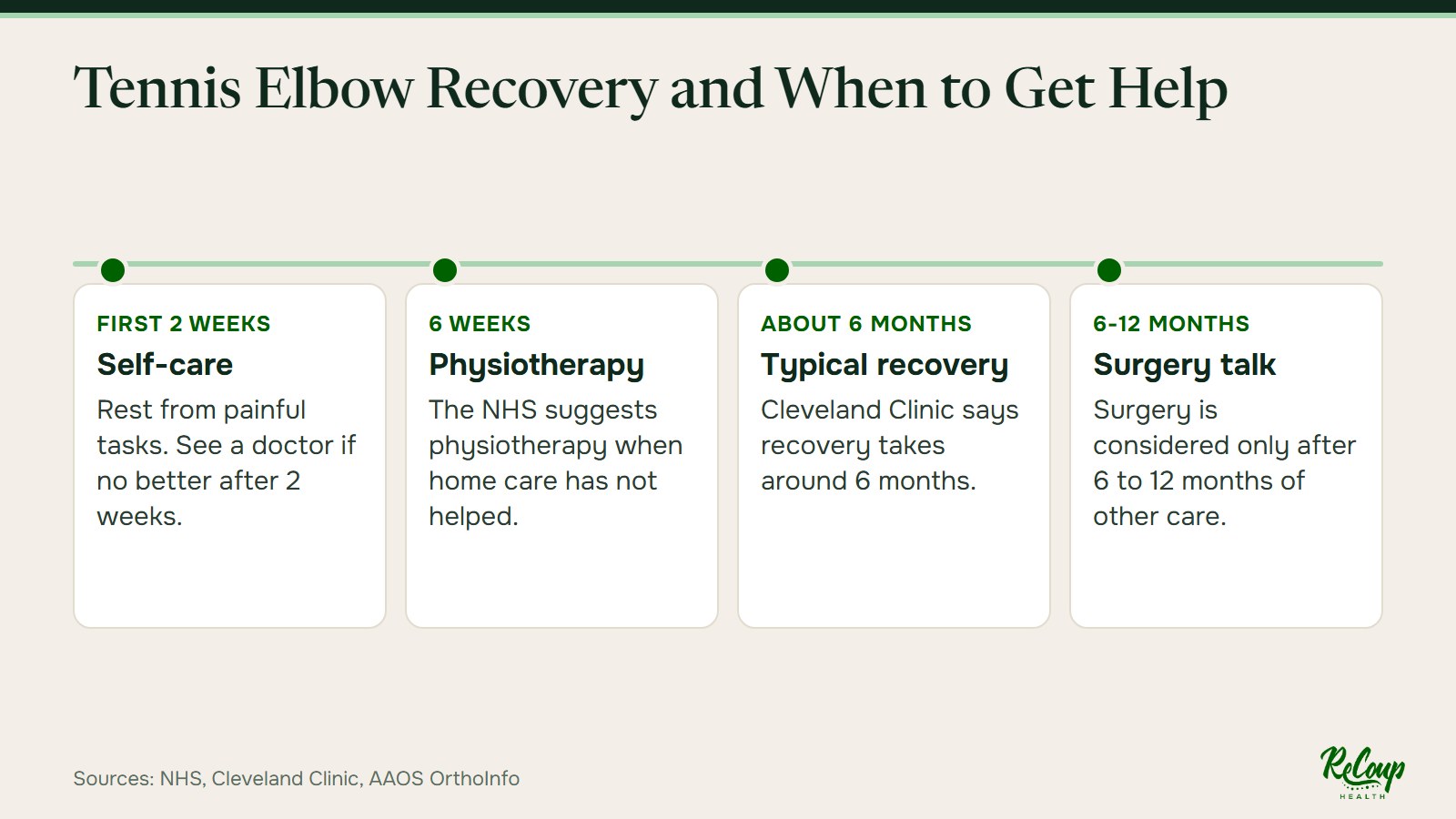
Each stage on the timeline reflects NHS, Cleveland Clinic and AAOS guidance. Many people add a brace during the early stages.
What Does a Tennis Elbow Brace Do?
A tennis elbow brace is a strap worn just below the elbow that spreads force away from the sore tendon attachment. A forearm strap can ease grip pain in the short term. A 2026 Scientific Reports trial of 56 people found a strap improved pain-free grip compared with no strap.
The long-term evidence is thin. A 2002 Cochrane review of five small trials found no firm conclusions on brace effectiveness. A brace supports other care, and the same forearm muscles explain why wrist pain can appear.
Can Tennis Elbow Cause Wrist Pain?
Tennis elbow can cause wrist pain because the injured muscles run from the outer elbow to the back of the hand. Pain can spread from the elbow into the forearm and wrist, per Cleveland Clinic. Pain centred in the wrist itself, with clicking or swelling, points to wrist joint problems instead.
Frequently Asked Questions About Tennis Elbow
What Are Signs of Tennis Elbow?
Signs of tennis elbow are tenderness on the outer elbow bump, a weaker grip and pain when lifting the wrist against resistance. Pain with a handshake or when lifting a full kettle is a classic sign.
What Is Good for Tennis Elbow Pain?
Rest from aggravating tasks, ice, a forearm strap and guided strengthening are good for tennis elbow pain. CCOHS lists ice packs and anti-inflammatory gels or tablets for short-term relief. Ask a pharmacist about safe use of any pain medicine.
Is Tennis Elbow the Same as Tendonitis?
Tennis elbow is a type of tendon disorder, and HSS calls it a form of tendonitis. CCOHS prefers the term tendinopathy, because the tendon degenerates rather than staying inflamed.
Can Computer Use Cause Tennis Elbow?
Yes, computer use can cause tennis elbow. CCOHS lists repetitive computer mouse use among the arm motions linked to the condition.
How Common Is Tennis Elbow?
Tennis elbow affects an estimated 1-3% of adults each year, per a 2019 Journal of Orthopaedics review. A 2006 Finnish study found 1.3% prevalence in adults aged 30 to 64.
How Recoup Health Helps With Tennis Elbow
We help people with tennis elbow find the cause of their pain and build a plan to calm and strengthen the tendon. Patients who ask what is tennis elbow at their first visit leave with a plain answer and a written home program. No doctor’s referral is needed.
Our multidisciplinary clinical team includes physiotherapists, registered massage therapists, a chiropractor and a performance coach. Each plan pairs graded forearm loading with grip and technique changes for work or sport. Progress is measured with grip strength and pain during daily tasks.
Book a visit through our appointment request page to start with a full exam of the elbow, wrist, shoulder and neck. Our clinic sits on Innovation Drive in Vaughan.
Elbow pain that keeps you from gripping, lifting or sleeping deserves a proper look. The Recoup Health experts can help you get back to work and play.