
Yes, massage helps plantar fasciitis, mainly by easing heel pain for days to weeks rather than repairing the fascia. A 2026 trial of 58 adults found myofascial release cut pain more than calf stretching over 8 weeks. Compression socks are a different story. No controlled trial we verified shows compression socks treat plantar fasciitis, so they work as a comfort add-on.
Key Takeaways
- Massage eases plantar fasciitis pain in the short term, with trial support for myofascial release.
- Calf massage matters as much as foot massage, because tight calves load the plantar fascia.
- Firm, comfortable pressure suits the heel better than sharp pressure on the heel bone.
- Compression socks have no verified trial evidence for plantar fasciitis, so they serve comfort only.
- Stretching and strengthening do the long-term work, and massage helps you stay consistent with them.
Does Massage Help Plantar Fasciitis Pain
Massage helps plantar fasciitis pain, and the trial evidence points to short-term relief rather than a lasting fix. Hands-on soft tissue work lowers heel pain within days to weeks, which makes walking and exercise easier. The relief fades without stretching and strengthening, so massage works as one part of a plan.
Plantar fasciitis is irritation of the plantar fascia, a thick band of tissue under the foot. The NHS says the main symptom is heel and arch pain that is worse with the first steps after rest. Those painful first steps are where massage earns its place.
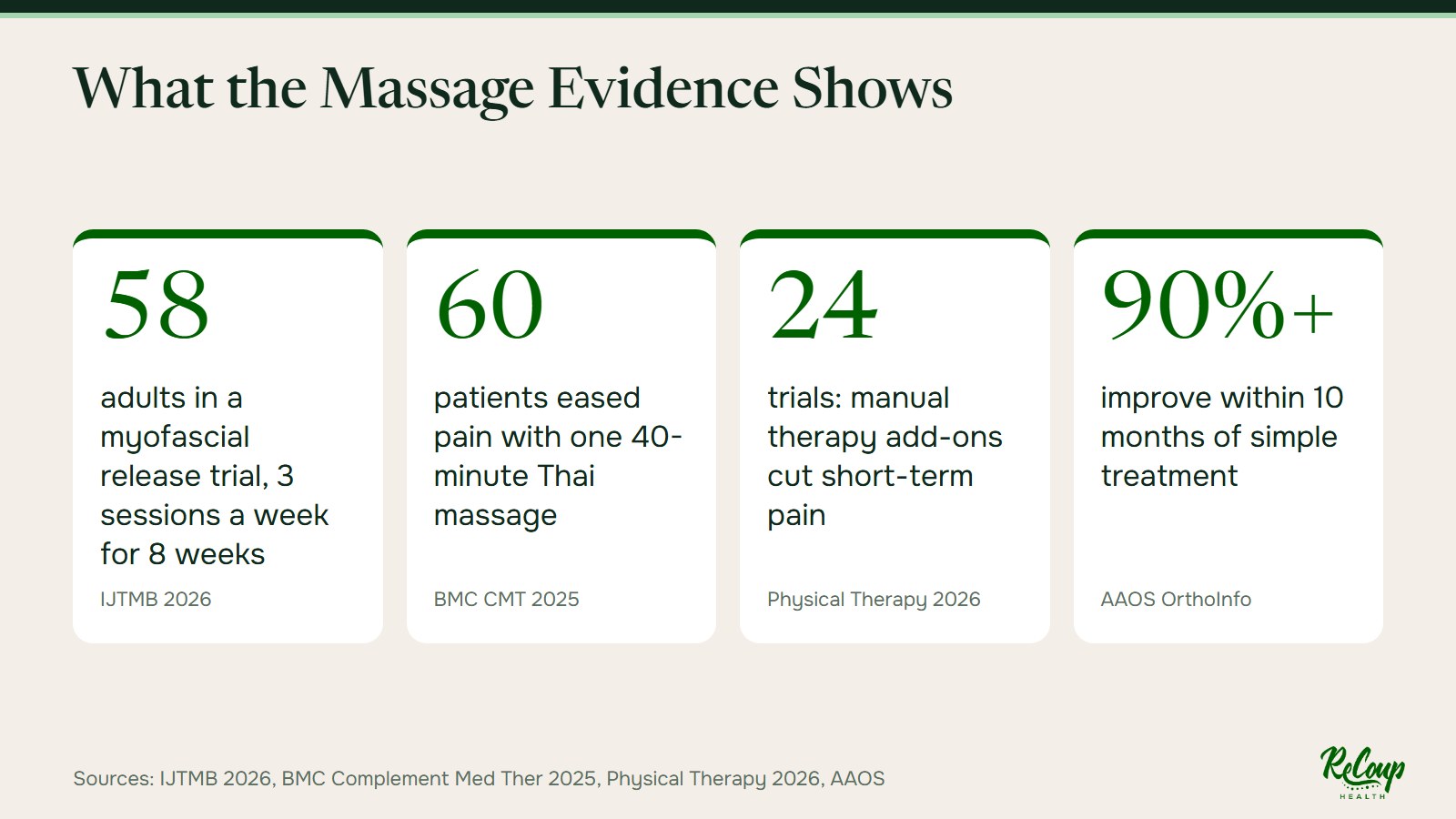
A 2026 randomized trial in the International Journal of Therapeutic Massage and Bodywork tested myofascial release in 58 adults. Myofascial release is a slow, sustained stretch of the fascia, the connective tissue around muscles. Both myofascial release and calf stretching reduced pain over 8 weeks of sessions 3 times weekly. The myofascial release group improved more for pain and for foot function.
A 2025 trial in BMC Complementary Medicine and Therapies compared one 40-minute Thai massage session with ultrasound therapy in 60 patients. Thai massage reduced pain right away and at 24 hours, although ultrasound reduced pain a little more. These short trials explain why a course of plantar fascia massage suits the early, painful phase of recovery.
Larger reviews show the same short-term pattern. A 2026 network meta-analysis in Physical Therapy pooled 24 randomized controlled trials with 1,240 participants. Manual therapy added to home exercise gave significant short-term pain gains. The answer to does massage help plantar fasciitis is therefore yes, for pain, with exercise doing the rebuilding.
The figures below sum up the main massage trials and the overall recovery outlook.
Those numbers raise a practical question about how massage actually produces relief.
How Does Massage Help Plantar Fasciitis
Massage helps plantar fasciitis by calming pain signals, relaxing tight calf muscles and making the ankle easier to bend. The main effect is on pain sensitivity and muscle tension, not on rebuilding the fascia itself. Claims that massage breaks up scar tissue have little direct proof in human trials.
The calf link matters because the calf connects to the heel through the Achilles tendon. A 2003 case-control study in the Journal of Bone and Joint Surgery compared 50 patients with matched controls. Ankle dorsiflexion of 0 degrees or less carried an odds ratio of 23.3 for plantar fasciitis. Dorsiflexion means pulling the foot up toward the shin.
That study was small, with a wide confidence interval, so it shows an association rather than a cause. Even so, loosening the calf is a logical target for any massage plan. Hands-on posterior chain stretching adds a second way to free the calf and hamstrings. The calf focus leads straight to the question of where on the leg massage belongs.
Is Foot Massage Good for Plantar Fasciitis or Should You Massage the Calf
Foot massage is good for plantar fasciitis comfort, but the calf deserves equal attention. A full plan treats the calf, the arch and the edges of the heel, not just the sorest spot. The NHS lists a tight calf or heel as a risk factor, which supports working above the foot.
Massage on the sole should stay on the arch and the soft edges of the heel. Hard pressure on the bony point where the fascia attaches can irritate it further. A registered massage therapist (RMT) works the gastrocnemius and soleus, the two main calf muscles, before moving to the foot. Gentle work through the small foot muscles then follows.
Sessions with our massage therapists also cover tight hamstrings, since the back of the leg works as one chain. The next choice is how deep that pressure should go.
Does Deep Tissue Massage Help Plantar Fasciitis
Deep tissue massage helps plantar fasciitis when the pressure targets the calf and stays tolerable on the foot. Deep tissue massage for plantar fasciitis uses slow, firm strokes to reach deeper muscle layers. Aim for firm pressure that feels strong but comfortable, not sharp or burning.
Cross-friction massage is a deep technique that rubs across the fascia fibres rather than along them. Therapists use cross-friction in short bursts, with the toes pulled up to put the arch on tension. Sharp, burning or tingling sensations mean the pressure is too high or a small nerve is irritated. That same pressure limit applies when you treat yourself at home.
Does a Massage Ball or Massage Gun Help Plantar Fasciitis
A massage ball or massage gun helps plantar fasciitis by letting you repeat gentle pressure between clinic visits. Self-massage tools have no plantar fasciitis trials of their own, so treat them as home support. A short routine before your first steps of the day is simple and low risk.
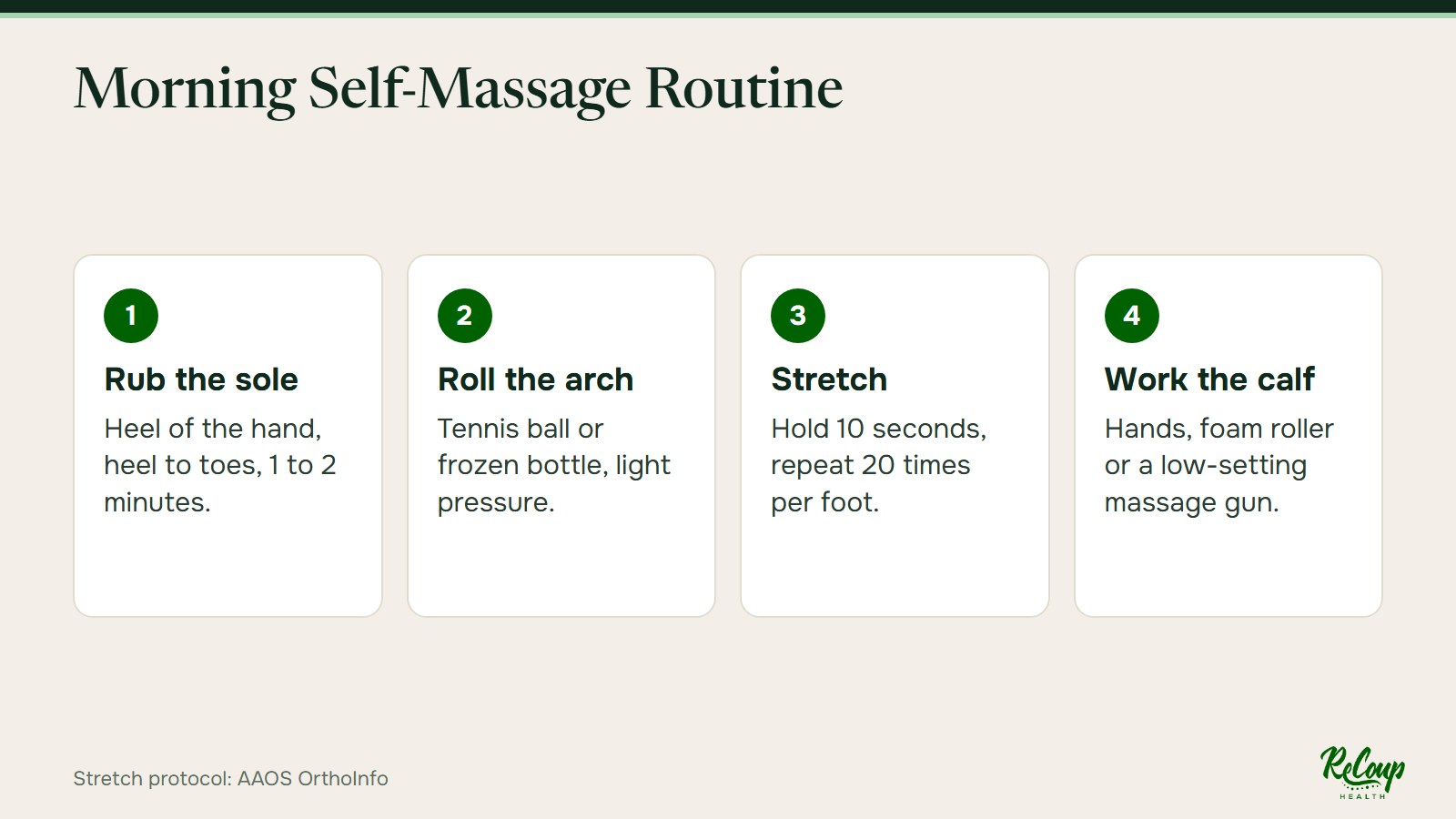
Follow these 5 steps for a short home routine:
- Sit on the edge of the bed before you stand up in the morning.
- Rub the sole with the heel of your hand, from heel to toes, for 1 to 2 minutes.
- Roll a tennis ball or a frozen water bottle under the arch with light pressure.
- Hold a plantar fascia stretch for 10 seconds and repeat it 20 times per foot, as AAOS OrthoInfo describes.
- Massage the calf with your hands, a foam roller or a massage gun on a low setting.
A massage gun belongs on the calf muscle, away from the heel bone, the shin bone and the back of the knee. The graphic below sums up this morning routine in 4 steps.
A routine only helps when it is repeated, which raises the question of frequency.
How Often Should You Massage Plantar Fasciitis
You can massage plantar fasciitis daily at home and add professional sessions during painful weeks. The 2026 myofascial release trial used sessions 3 times a week for 8 weeks, which gives a useful reference point. Daily self-massage can fill the gaps between those sessions.
Home massage fits naturally into the morning, when first-step pain is worst, according to the NHS. AAOS OrthoInfo suggests doing the plantar fascia stretch in the morning before standing. Pairing that stretch with 1 to 2 minutes of massage takes little extra time.
Strengthening sets the longer timeline. Canadian Family Physician (2018) advises high-load strengthening daily for at least 3 months or until pain stops. A short course of RMT sessions can make those painful weeks easier while strength builds. Extra massage has limits, though.
Can Too Much Massage Make Plantar Fasciitis Worse
Too much massage can make plantar fasciitis worse, especially when deep pressure lands on the sore heel attachment. The short answer to can massage make plantar fasciitis worse is yes, when pressure is too heavy or too frequent. Soreness that lasts past the next morning is a sign to lighten the pressure.
Massaging plantar fasciitis hurts for a few reasons. The fascia near the heel is sensitive, and small nerves run under the arch. A 2026 review in the Journal of the American Podiatric Medical Association found neurological findings in 49% of 459 patients. Tingling during massage points to an irritated nerve rather than tight tissue.
Stop massage and get checked for these warning signs:
- Tingling or loss of feeling in the foot, which the NHS says needs a doctor’s review.
- Diabetes with foot pain, since the NHS notes foot problems can be more serious.
- Severe pain, or pain that stops normal daily activity.
- Sudden sharp heel pain after a steroid injection, since a 2017 Cochrane review recorded fascia ruptures.
- Heat, redness or swelling, which point to a problem other than typical plantar fasciitis.
Go to an emergency department for a hot, red, swollen foot with fever. Heel pain that keeps returning deserves a full assessment, and our team treats persistent heel pain with hands-on care and exercise. Compression socks are the other tool people reach for.
Do Compression Socks Help Plantar Fasciitis
Compression socks help plantar fasciitis comfort for some people, but no controlled trial we verified shows they treat the condition. Compression socks are a comfort add-on, not a stand-alone treatment. The fair reply to do compression socks help with plantar fasciitis is that they may ease comfort without repairing the fascia.
The 2021 practice guide in the British Journal of Sports Medicine covered 51 trials and 4,351 participants. Its core treatment was taping, stretching and individual education, with no role listed for compression socks. That gap in the evidence shapes how compression should be used.
Plantar fasciitis sleeves are compression socks or foot sleeves that hug the arch and heel. Some styles stop at the ankle, while knee-high socks also squeeze the calf. Graduated stockings are tightest at the ankle and looser higher up the leg. Our clinic fits medical compression stockings for tired, aching legs after long days of standing.
How Do Compression Socks Help Plantar Fasciitis
Compression socks help plantar fasciitis comfort through gentle pressure, warmth and a feeling of support around the arch. The proposed benefits are comfort and support, and no plantar fasciitis trial we verified has tested them. Knee-high compression also eases leg heaviness for people who stand all day.
The 2003 study found an odds ratio of 3.6 for spending most of the workday on your feet. That standing link explains why workers on their feet try compression first. Compression still leaves the tight calf and weak foot muscles untreated.
Compression is not safe for everyone. People with poor leg circulation, diabetes-related nerve loss or skin wounds should talk to their family doctor first. A side-by-side view shows how compression compares with massage.
Massage vs Compression Socks for Plantar Fasciitis, Which Helps More
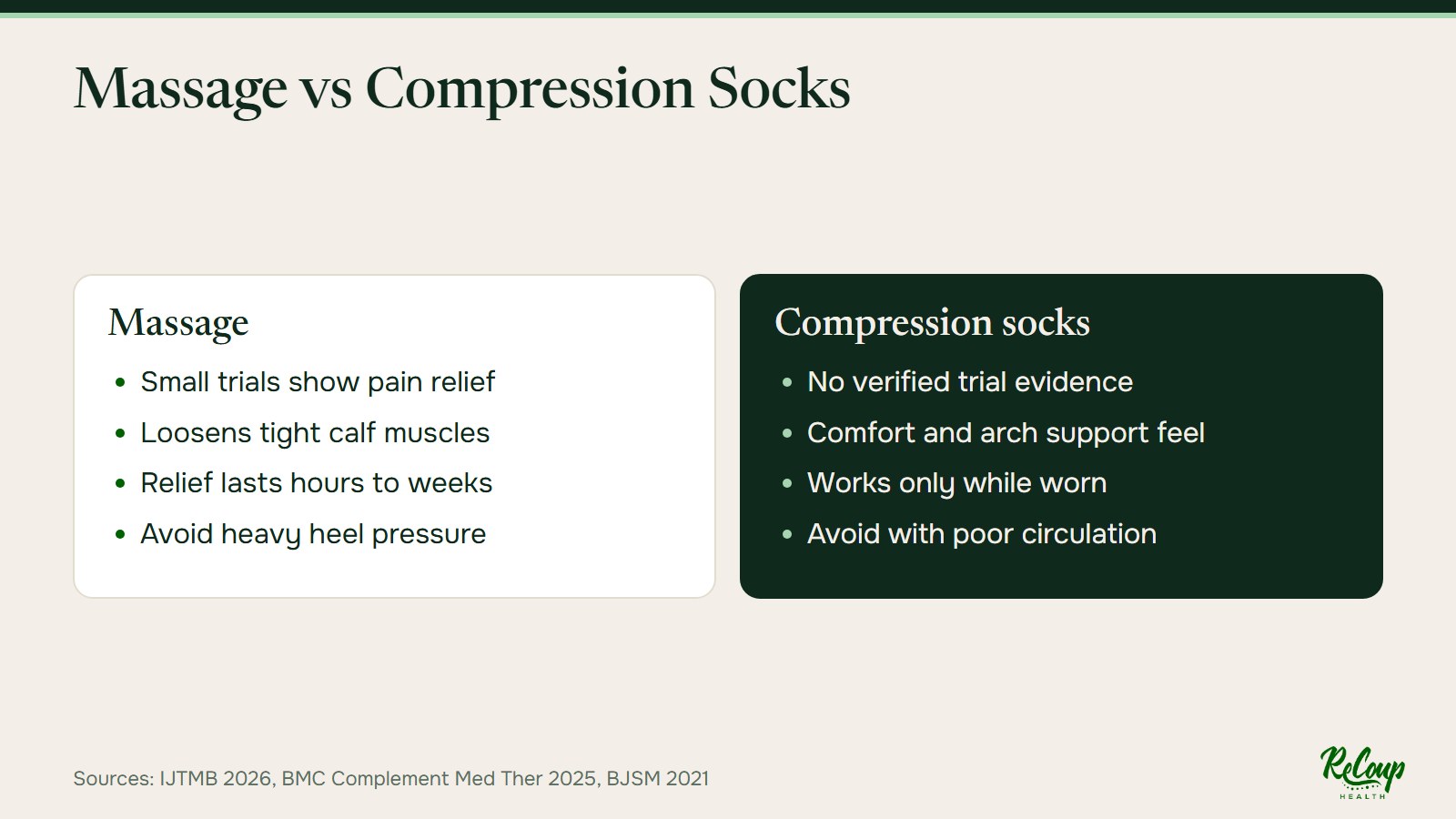
Massage helps plantar fasciitis more than compression socks, because only massage has trial data in people with heel pain. Massage has small trials showing short-term pain relief, while compression socks have none we verified. The table below compares the two tools side by side.
| Factor | Massage | Compression socks |
|---|---|---|
| Main difference | Works the calf and foot tissue directly | Gives passive pressure and support while worn |
| Plantar fasciitis evidence | Small trials of 58 and 60 patients, plus a 24-trial review | No verified trial |
| Main effect | Lower pain and calf tension | Comfort, warmth and a feeling of arch support |
| How long it lasts | Hours to weeks after a course of sessions | Only while the socks are on |
| Main risk | Flare-up from heavy pressure on the heel | Unsafe with poor leg circulation or skin wounds |
| Who it suits | Morning stiffness and tight calves | People who stand for long shifts |
The table shows the two tools do different jobs, so using both on the same day is reasonable. The comparison graphic below sums up what each tool offers.
Massage and compression sit alongside several other options worth knowing.
What Else Helps Plantar Fasciitis Besides Massage and Compression Socks
Several other treatments help plantar fasciitis besides massage and compression socks, and the evidence for each differs.
Is There a Pressure Point to Relieve Plantar Fasciitis
No single pressure point relieves plantar fasciitis in the trials we verified. Steady pressure on a tender spot in the arch or calf can ease pain for a short time. Hold gentle pressure until the tenderness fades, then move on. Avoid digging into the heel bone itself.
Can Acupuncture Help Plantar Fasciitis
Acupuncture may ease plantar fasciitis pain, though the needling evidence we verified comes from dry needling. Dry needling, a related technique aimed at tight muscle points, gave short-term pain gains in the 2026 Physical Therapy review. Needling works as an add-on for pain, paired with exercise. Our founding chiropractor offers acupuncture and cupping.
Does Cupping Help Plantar Fasciitis
Cupping may help plantar fasciitis comfort, but no cupping trial appears in the evidence we verified. Cupping uses suction cups to lift skin and fascia, the opposite of pressing down. Treat cupping as a short-term comfort option, not a core treatment. Round marks on the skin can last several days.
Can a Chiropractor Help With Plantar Fasciitis
A chiropractor can help with plantar fasciitis through ankle and foot joint mobilization, soft tissue work and exercise advice. Chiropractic care targets stiff ankle and foot joints that limit heel motion. Better ankle bend matters, given the 23.3 odds ratio for limited dorsiflexion in the 2003 study. Sessions of chiropractic ankle care pair joint work with home exercises.
Do Custom Orthotics Help Plantar Fasciitis
Custom orthotics help plantar fasciitis pain modestly, and studies disagree on how much. A 2018 British Journal of Sports Medicine meta-analysis of 19 trials and 1,660 participants found a small medium-term benefit over sham insoles. A second 2018 review found no meaningful short-term difference between custom, prefabricated and sham insoles. Orthotics work as support, not a quick fix.
Flat feet and long standing days are common reasons to try an orthotic foot support alongside exercise. Overnight support is another option.
Does a Foot Brace Help Plantar Fasciitis
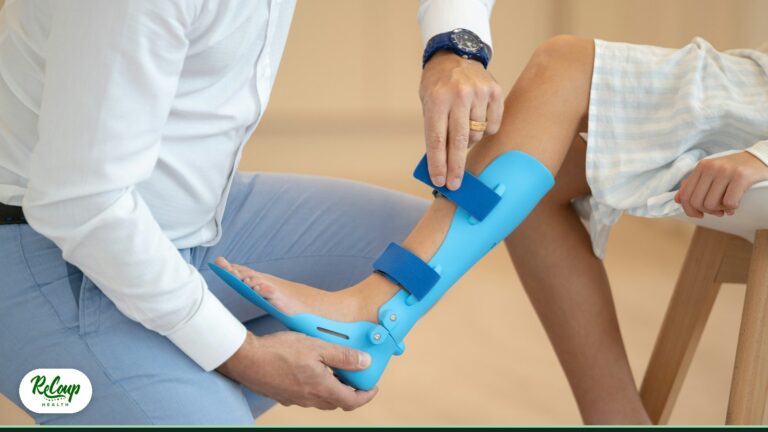
A foot brace or night splint helps some people with plantar fasciitis by keeping the fascia gently stretched overnight. AAOS OrthoInfo describes night splints as very effective, although recent trial support is limited. A 2019 Journal of Sport Rehabilitation review found splints plus insoles beat either one alone. Splints work in combination with insoles.
Heel pain that follows an old ankle injury may also call for ankle support braces during activity. Exercise remains the base of every plan.
Can Physiotherapy Help Plantar Fasciitis
Physiotherapy helps plantar fasciitis through stretching, strengthening and load advice, the treatments with the strongest support. In a 101-patient trial, plantar fascia-specific stretching beat Achilles stretching for first-step morning pain at 8 weeks. Exercise does the long-term work that massage cannot. The 2021 practice guide found plantar fascia stretching had a large short-term effect on first-step pain.
A guided plantar fasciitis rehab program adds heavy strengthening once pain settles.
Frequently Asked Questions About Massage for Plantar Fasciitis
What Finally Helps Plantar Fasciitis Go Away
Consistent stretching, strengthening and time help plantar fasciitis go away. AAOS OrthoInfo reports that more than 90% of patients improve within 10 months of simple treatment. Patience matters, since Canadian Family Physician notes about 40% still have symptoms at 2 years.
Why Does Massaging Plantar Fasciitis Feel Good
Massaging plantar fasciitis feels good because pressure dampens pain signals and relaxes tight muscles for a while. The relief is real but temporary, so pair it with exercise.
Should You Massage Your Foot Before Getting Out of Bed
Massaging your foot before getting out of bed eases the first steps of the day. The NHS says plantar fasciitis pain is worse with first steps after sleep. A 1 to 2 minute rub plus a stretch is enough.
How Common Is Plantar Fasciitis
Plantar fasciitis affects an estimated 3.6% to 7% of the general population, according to Canadian Family Physician. Runners are a key group, with plantar fasciitis making up to 8% of running injuries.
When Should You See a Doctor About Heel Pain
See a doctor about heel pain that has not improved after 2 weeks of self-treatment, according to the NHS. Canadian Family Physician advises a family physician visit when symptoms persist beyond 6 months of exercise.
How Recoup Health Supports Plantar Fasciitis Recovery
We support plantar fasciitis recovery with registered massage therapy, physiotherapy, chiropractic care and foot support in one clinic. Your plan pairs short-term pain relief with the exercise that rebuilds the foot. No doctor’s referral is needed to book a visit at our Vaughan clinic.
For anyone still asking does massage help plantar fasciitis, a session of heel massage sessions lets you feel the difference firsthand. Our therapists also show you a safe home routine for the arch and calf. That routine keeps the relief going between visits while your strength builds week by week.
Our massage team works beside our physiotherapists, chiropractor and naturopathic doctor, so the Recoup Health RMTs share one plan with them. Compression stockings and orthotics are fitted in the same visit when they suit your feet and work day.
Talk to your physiotherapist or family doctor about the right mix of treatments for your heel. Use our heel pain appointment form to arrange a first assessment.