
Symptoms of spinal stenosis are pain, numbness, tingling and weakness caused by a narrowed spinal canal pressing on nerves. Lower back narrowing affects the buttocks, legs and feet, while neck narrowing affects the arms and hands. AAOS OrthoInfo reports that walking 1 or 2 blocks can trigger leg pain or weakness. Sitting down or leaning forward then eases that leg pain.
Key Takeaways
- Spinal stenosis symptoms depend on where the canal narrows: the lower back, the neck or, rarely, the mid-back.
- Lumbar symptoms follow a posture pattern: worse with standing and walking, easier with sitting or bending forward.
- Neck stenosis can cause clumsy hands, trouble with buttons and poor balance.
- Up to 95% of people show degenerative spine change by age 50, so a scan alone does not explain symptoms.
- New bladder or bowel changes, saddle numbness or fast-spreading leg weakness need emergency care.
What Are the Symptoms of Spinal Stenosis
The symptoms of spinal stenosis are pain, numbness, tingling and weakness that spread from the spine into the limbs. The National Institute of Arthritis and Musculoskeletal and Skin Diseases (NIAMS) tracks this pattern. NIAMS lists burning pain or aching into the legs from lower back narrowing. Neck narrowing produces neck pain plus numbness or tingling in the arms and hands.
Spinal stenosis means the spinal canal, the bony channel around the spinal cord and nerve roots, has narrowed. Narrowing squeezes those nerves, and squeezed nerves send faulty signals to the muscles and skin they supply. Our guide to spinal stenosis care explains how the clinic assesses that pressure. The location of the squeeze decides where the symptoms show up first.
What Are the Warning Signs of Spinal Stenosis
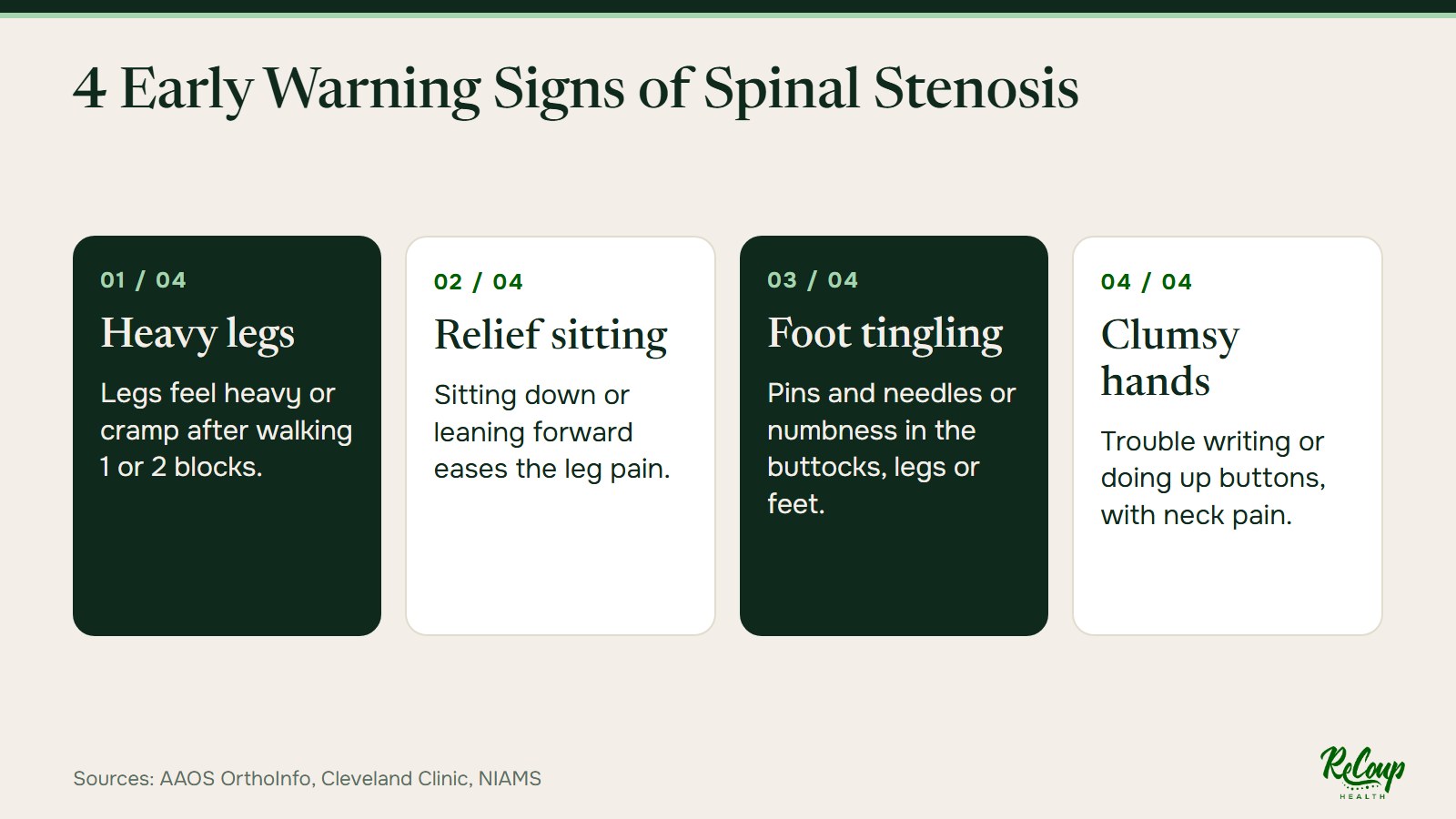
The warning signs of spinal stenosis are heavy legs on short walks, relief when sitting, and new numbness. Cleveland Clinic notes that symptoms develop slowly, so early signs are easy to blame on age. Early signs also tend to appear only during certain activities.
The four early warning signs below show the pattern that separates stenosis from ordinary muscle soreness. Each sign links an activity to a nerve symptom.
Those warning signs differ by spine region, and the lower back is the region where narrowing produces the clearest pattern.
What Are Lumbar Spinal Stenosis Symptoms
Lumbar spinal stenosis symptoms are low back pain plus cramping, numbness or heaviness running through the buttocks into the legs. Cleveland Clinic describes pain that starts in the buttock and can continue into the foot. The lumbar spine has 5 vertebrae, and narrowing at any of those levels can press on leg nerves.
Back pain alone is a weak clue. Leg symptoms that track with posture are the stronger clue. The signs of spinal stenosis in lower back include an ache that builds while standing in a lineup. People with lower back aches but no leg symptoms may have a different source of pain. The legs carry the clearest lumbar signs.
What Do Spinal Stenosis Symptoms in Legs Feel Like
Spinal stenosis symptoms in legs feel like heaviness, cramping, burning or pins and needles that build while walking and fade with rest. Clinicians call this pattern neurogenic claudication, meaning leg pain caused by squeezed nerves rather than poor blood flow. AAOS OrthoInfo reports that walking more than 1 or 2 blocks may bring on severe sciatica or leg weakness.
Leg symptoms can affect one side or both sides. One-sided burning that shoots down the back of the thigh can mimic radiating sciatica pain from a disc. Circulation problems also cause calf pain with walking, but that pain eases with standing still rather than sitting. The posture link is the key difference, and that posture link explains the next pattern.
Why Do Symptoms Ease When You Lean Forward
Symptoms ease when you lean forward because bending forward opens the spinal canal and takes pressure off the nerves. Cleveland Clinic lists leaning forward, walking uphill and sitting as positions that lessen lumbar pain. Standing for long periods, walking and walking downhill make the pain worse.
AAOS OrthoInfo notes that some people walk comfortably while leaning on a shopping cart. The same source reports that riding a stationary bike may be easier than walking. That shopping cart pattern is a lower back sign, while the neck produces a different set of symptoms.
What Are Cervical Spinal Stenosis Symptoms
Cervical spinal stenosis symptoms are neck pain, numbness or tingling in the arms and hands, and weakness or clumsiness in the hands. The cervical spine has 7 vertebrae, according to Cleveland Clinic. Cleveland Clinic adds that symptoms can appear anywhere below the point of narrowing, including the legs.
Spinal stenosis in neck symptoms can also involve balance. Cleveland Clinic lists balance problems and reduced hand function, such as trouble writing or buttoning a shirt. Those signs point to pressure on the spinal cord itself and deserve a prompt medical assessment. Neck narrowing is common, while mid-back narrowing is rare.
What Are Thoracic Spinal Stenosis Symptoms
Thoracic spinal stenosis symptoms are mid-back pain plus numbness, weakness or balance changes below the chest level. Cleveland Clinic states that thoracic stenosis is rare. Narrowing in the mid-back presses on the spinal cord, so symptoms can show up in the trunk and both legs.
Mid-back pain has many common causes, such as posture strain and rib joint irritation. Persistent mid-back stiffness without leg or balance changes points away from thoracic stenosis. The table below compares the three regions side by side.
| Region | Main difference | Typical symptoms | Source |
|---|---|---|---|
| Lumbar (lower back, 5 vertebrae) | Leg symptoms change with posture | Buttock and leg pain, cramping, numbness, foot weakness; worse standing, easier sitting | Cleveland Clinic, NIAMS |
| Cervical (neck, 7 vertebrae) | Hands and balance are affected | Neck pain, arm and hand tingling, clumsy hands, trouble with buttons, unsteady walking | Cleveland Clinic, NIAMS |
| Thoracic (mid-back) | Rare, and symptoms sit below the chest | Mid-back pain, trunk or leg numbness, leg weakness, balance changes | Cleveland Clinic |
The table shows that posture drives lumbar symptoms, while hand skill and balance flag cervical narrowing. Every region shares one feature: symptoms can rise and fall from day to day.
Can Symptoms of Spinal Stenosis Come and Go
Yes, symptoms of spinal stenosis can come and go, and flare-ups depend on activity, posture and the time spent upright. Cleveland Clinic states that symptoms may come and go and affect each person differently. A long day of standing can bring a flare, and a rest day can settle it.
Mild spinal stenosis symptoms may appear only during long walks or extended standing. NIAMS reports that symptoms progress slowly for most people, and some people have no symptoms at all. Steady, slow change is the expected course, so faster change deserves attention.
What Are the Signs Spinal Stenosis Is Getting Worse
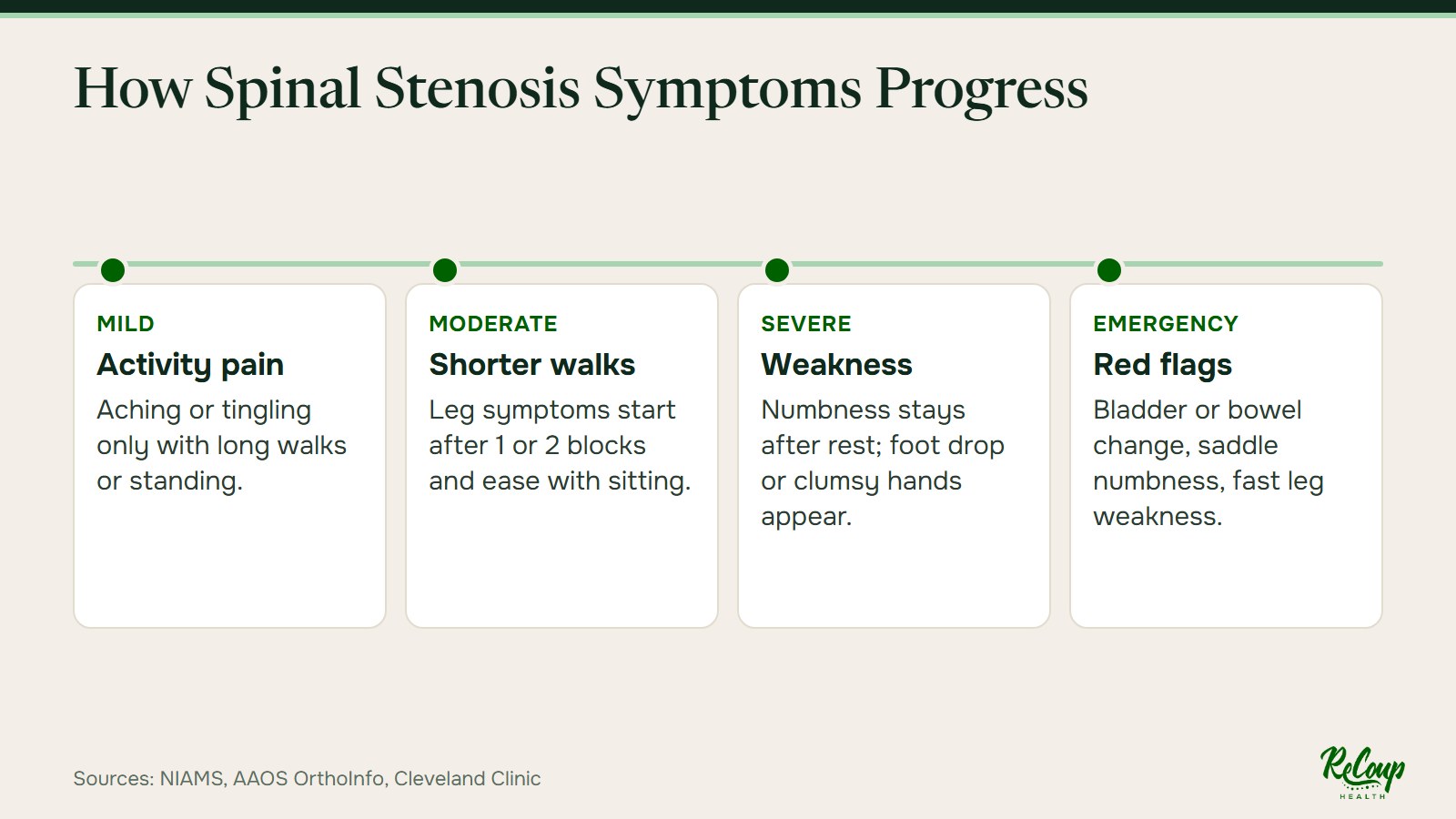
The signs spinal stenosis is getting worse are shorter walking distance, numbness that stays after rest, and new limb weakness. AAOS OrthoInfo describes leg or foot weakness, including foot drop, as a sign of critical pressure on a nerve. Foot drop means trouble lifting the front of the foot, which causes tripping.
The timeline below shows how symptoms tend to shift from mild to severe stages. Each stage adds a new type of nerve symptom.
A simple symptom log helps you and your clinician spot that progression. Track these details for 2 weeks before an appointment:
- The distance or minutes you walk before leg symptoms start.
- The positions that ease symptoms, such as sitting or leaning forward.
- Any numbness that stays after 10 minutes of rest.
- Hand tasks that feel harder, such as writing, buttons or zippers.
- Trips, stumbles or a foot that catches on the ground.
A written log turns a vague worry into numbers, and those numbers can help stenosis symptom relief plans track progress. Some changes, though, are emergencies rather than log entries.
Can Severe Spinal Stenosis Cause Bowel Problems
Yes, severe spinal stenosis can cause bowel problems, and new bowel or bladder changes are a medical emergency. Severe cases can also disturb bowel, bladder or sexual function, according to NIAMS. AAOS OrthoInfo links these signs to cauda equina syndrome, a rare compression of the nerve bundle at the base of the spine.
Symptoms of severe spinal stenosis that need the emergency department right away include:
- New loss of bladder control, or trouble starting to pass urine.
- New loss of bowel control.
- Numbness in the saddle area, meaning the groin, genitals, buttocks or inner thighs.
- Leg weakness that spreads quickly or affects both legs.
- Sudden loss of hand control or balance with neck pain.
A Scottish study by Woodfield and colleagues found cauda equina syndrome in about 2.7 people per 100,000 each year. Fast care matters for those rare cases, and the same urgency applies to the question of paralysis.
Can Spinal Stenosis Cause Paralysis
Yes, spinal stenosis can cause paralysis, but Cleveland Clinic describes partial or complete leg paralysis as very rare. Paralysis arises only in extreme cases of nerve or spinal cord compression. Cleveland Clinic lists bladder, bowel and sexual problems as other severe complications.
Gradual weakness, such as a dragging foot, is the earlier warning that comes before serious loss of function. Talk to your family doctor promptly about any new weakness. A medical assessment then confirms whether stenosis explains the symptoms.
How Do You Confirm Spinal Stenosis
You confirm spinal stenosis with a symptom history and physical exam, followed by imaging such as MRI or CT when needed. Cleveland Clinic describes an exam where the provider presses on the spine and asks you to bend in set directions. Imaging then shows the exact location and extent of the narrowing.
Imaging findings must match the symptoms, because scan changes are common in people without pain. The stats below come from large imaging studies.
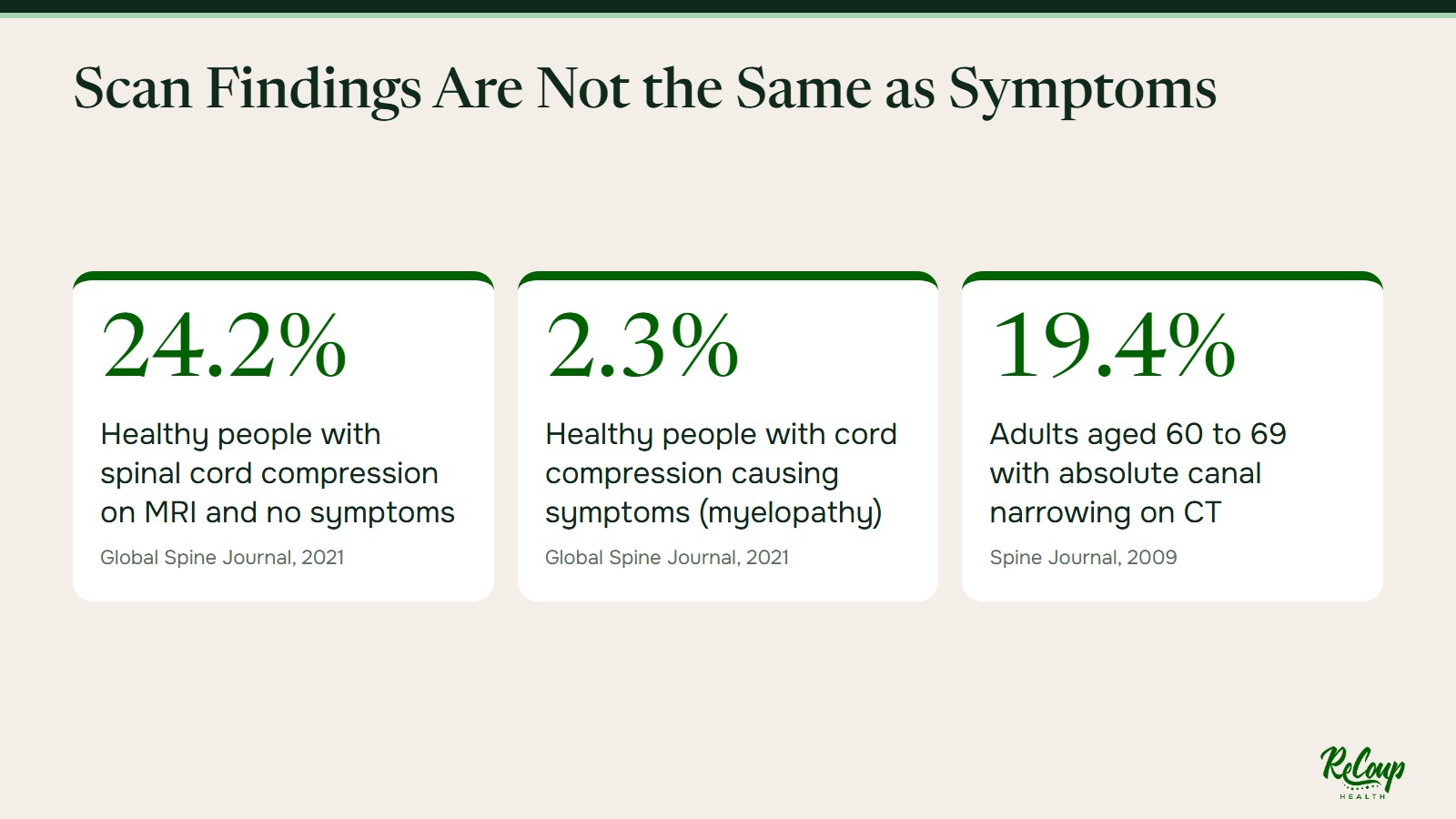
A 2021 Global Spine Journal review of 19 studies found spinal cord compression on MRI in 24.2% of healthy people without symptoms. The same review found degenerative cervical myelopathy, meaning cord compression with symptoms, in about 2.3% of healthy people. Framingham CT data showed absolute narrowing in 19.4% of adults aged 60 to 69.
Other conditions can copy stenosis symptoms, including a lumbar disc herniation or circulation problems in the legs. Your clinician compares the exam, the scan and your symptom log before naming the cause. Age is one more piece of that picture.
What Else Should You Know About Spinal Stenosis Symptoms
Spinal stenosis symptoms raise side questions about age, timing, recovery and care. The short answers below cover the questions people search after noticing symptoms.
At What Age Is Spinal Stenosis Most Common
Spinal stenosis is most common after age 50, according to Cleveland Clinic, and AAOS OrthoInfo places most cases in adults over 60. Cleveland Clinic reports that only 9% of cases come from congenital causes. AAOS OrthoInfo notes that congenital-type symptoms first appear between about ages 30 and 50.
AAOS OrthoInfo names arthritis as the most common cause, as arthritic spine joints grow bone spurs into the canal. That age-related wear builds over years, which shapes how fast symptoms develop.
How Long Does It Take for Spinal Stenosis to Develop
Spinal stenosis takes years to develop, because the narrowing comes from slow, age-related wear. NIAMS states that symptoms progress slowly for most people. Framingham CT data showed absolute narrowing rising from 4.0% under age 40 to 19.4% at ages 60 to 69. Slow development raises the question of natural recovery.
Can Spinal Stenosis Heal on Its Own
No, spinal stenosis does not heal on its own, because the bony narrowing stays, but symptoms can settle and stay stable. NIAMS reports that some people with narrowing have no symptoms. Surgery is not needed for most people with spinal stenosis, according to Cleveland Clinic. Symptom control is the realistic goal of care.
Which Treatment Helps Spinal Stenosis Symptoms
Exercise-based physiotherapy helps spinal stenosis symptoms, and trials show results close to surgery for some patients. The Delitto trial in the Annals of Internal Medicine followed 169 adults aged 50 or older. Physical function improved 19.2 points with physical therapy and 22.4 points with surgery after 2 years, with no significant difference.
A 2021 trial by Minetama and colleagues found meaningful symptom gains in 60.5% of supervised exercise patients, versus 32.6% with home exercise. Supervised stenosis physiotherapy focuses on walking tolerance, flexion-based exercise and strength. A Cochrane review of 21 trials found moderate or high-quality evidence for non-surgical care is still lacking.
Surgery remains an option when symptoms keep progressing. People who choose decompression can prepare with spine surgery rehab before and after the operation. Many people also ask about gentler home options.
What Natural Remedies Help Spinal Stenosis Pain
Natural remedies that help spinal stenosis pain are regular walking within your comfort range, cycling, forward-bending stretches and heat. AAOS OrthoInfo notes that a stationary bike can be easier than walking. Cleveland Clinic suggests heat for arthritis-related aches and regular exercise to support the spine.
Diet, sleep and weight also shape pain levels. A licensed provider can offer naturopathic pain support alongside exercise. Talk to your family doctor or pharmacist before starting supplements. Sex differences are another common search.
Are Spinal Stenosis Symptoms Different in Women
Spinal stenosis symptoms are the same in women and men, though some risk patterns differ by sex. NIAMS lists one symptom pattern for all adults. AAOS OrthoInfo reports that congenital-type stenosis appears more in men, while the Woodfield study found cauda equina syndrome more in women.
Bladder leaks after pregnancy or menopause have many causes besides the spine. A clinician can separate nerve-related bladder change from pelvic muscle weakness that responds to pelvic floor physiotherapy. Sudden bladder change with back pain still needs the emergency department.
How Recoup Health Helps With Spinal Stenosis Symptoms
Recoup Health helps with spinal stenosis symptoms through a hands-on assessment, a symptom-matched exercise plan and progress tracking. We review your symptom log, test strength and sensation, and check how posture changes your symptoms. No doctor’s referral is needed to book.
Physiotherapists, a chiropractor and registered massage therapists work together on our spine team. Plans build walking tolerance step by step and adjust as symptoms change. We refer you back to your family doctor whenever red-flag symptoms appear.
People across Vaughan visit our Innovation Drive clinic for spine care. To book a first visit, use the spine appointment request form and mention your main symptoms. Bring your symptom log, a list of current medications and any imaging reports to that first visit.
Early attention to the symptoms of spinal stenosis keeps more of your daily walking range intact. Small gains in walking distance add up over weeks of steady practice. Our physiotherapists at Recoup Health’s clinic can explain your symptom pattern and plan the next steps with you.