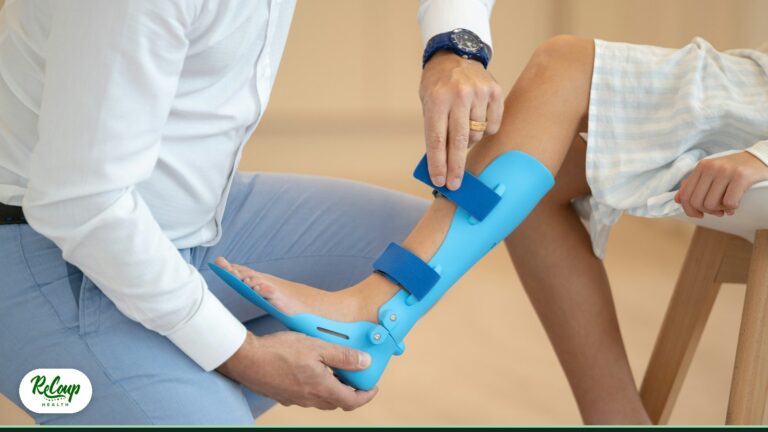

Plantar fasciitis is irritation and wear of the plantar fascia. The plantar fascia is the thick band of tissue linking the heel to the toes. The condition affects an estimated 3.6% to 7% of people, according to Canadian Family Physician. Two symptoms stand out: pain under the heel or arch, and pain that peaks with the first steps after sleep or rest.
Key Takeaways
- Plantar fasciitis is strain and wear of the tissue band that supports the arch of the foot.
- The 2 main symptoms are heel or arch pain and sharp pain with the first steps after rest.
- AAOS OrthoInfo reports the condition is most common between ages 40 and 60.
- Heel spurs, stress fractures, Achilles problems and trapped nerves can mimic the pain.
- AAOS states more than 90% of people improve within 10 months of simple treatment.
What Is Plantar Fasciitis in the Foot
Plantar fasciitis in the foot is a painful overload of the plantar fascia where the band attaches to the heel bone. The plantar fascia is a strong, fibrous band, similar to a ligament, running from the heel to the toes. The band holds up the arch and absorbs force with every step.
Repeated force on the band can create tiny tears and thickening near the heel bone, according to Harvard Health. Those tears and that thickening explain the sharp, local heel pain. Clear first-line guidance comes from heel-focused physiotherapy, which focuses on loading and stretching the band safely. Safe loading starts with knowing how the band works.
How Does the Plantar Fascia Work
The plantar fascia works like a tight bowstring under the foot. The band tightens when the toes bend upward during push-off. That tightening raises the arch and turns the foot into a stiff lever for walking.
Each step repeats this lever action thousands of times a day. A band that is stiff, overloaded or under-conditioned starts to protest at its weakest point, the heel attachment. The heel attachment is also where the old “inflammation” label came from.
Is Plantar Fasciitis Inflammation or Degeneration
Plantar fasciitis involves both short-term irritation and longer-term wear of the fascia. The name ends in “itis”, which means inflammation. Harvard Health explains that ongoing strain leads to chronic degeneration and small tears, with thickening seen on ultrasound.
The wear model matters for treatment. Tissue wear responds to gradual loading and recovery time, not rest alone. Recovery time also depends on spotting the condition early, and early spotting starts with the symptoms.
What Are 2 Symptoms of Plantar Fasciitis
The 2 symptoms of plantar fasciitis are heel and arch pain, plus pain that is worse with the first steps after rest. The NHS places the pain on the bottom of the foot, around the heel and arch. The NHS also notes that stretching the sole of the foot hurts.
The cards below show the 2 main symptoms, one extra sign and one warning sign.
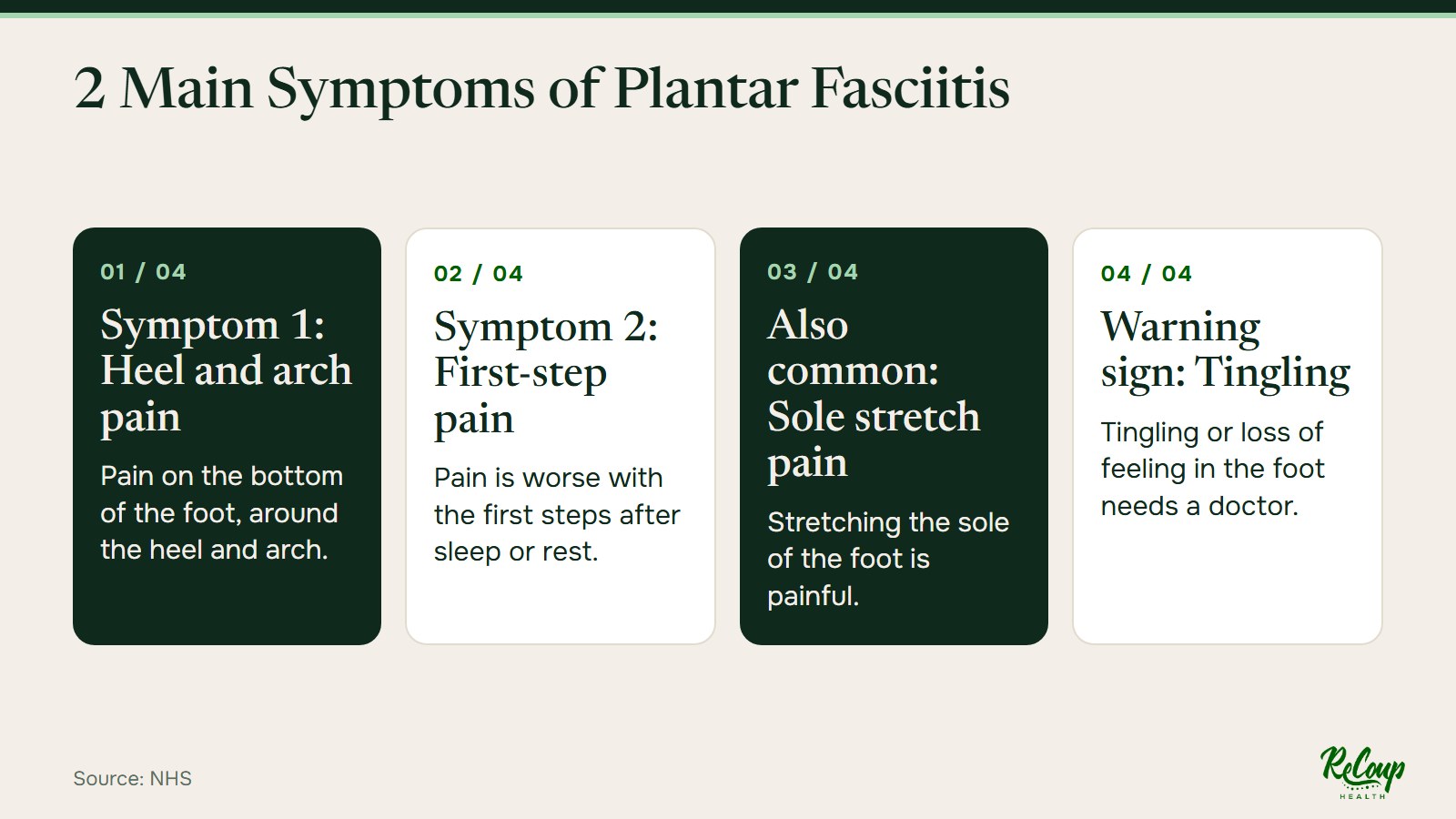
Heel pain and first-step pain together point strongly to the condition. Pain that peaks with the first morning steps is the classic clue. Other signs, such as tenderness and stiffness, add detail to the picture of the pain itself.
What Is Plantar Fasciitis Pain Like
Plantar fasciitis pain is a sharp, stabbing or dull ache under the heel. Harvard Health describes a sharp, stabbing sensation and an arch that can ache or burn. The pain eases after a few minutes of walking, then returns after long periods of standing or sitting.
Climbing stairs can be painful, according to Harvard Health. Tenderness when pressing just in front of the heel bone is another clue. The timing of the pain, worst in the morning, has a clear mechanical reason.
Why Does Plantar Fasciitis Hurt More in the Morning
Plantar fasciitis hurts more in the morning because the fascia shortens and stiffens overnight. The foot rests in a pointed position during sleep. The first step pulls the shortened band tight in one sudden stretch.
UC Davis Health compares the band to a loose rubber band that snaps tight with the first step. The same stretch happens after a long drive or a long meeting. Understanding that stretch leads to the question of what overloads the band in the first place.
What Are the Causes of Plantar Fasciitis
The causes of plantar fasciitis are repeated strain and overload on the fascia, with no single trigger in every case. The NHS states the reason the fascia becomes strained is not always clear. Overload builds when the load on the band exceeds what the tissue can handle. AAOS OrthoInfo and the NHS list these main causes and risk factors:
- Age between 40 and 60
- Higher body weight
- Tight calf muscles or a stiff ankle
- Long hours standing, walking or running on hard surfaces
- Flat feet or a high arch
- A sudden jump in exercise or running mileage
Six factors appear in that list, but some carry more weight than others. Research numbers help rank these risk factors.
What Is the Root Cause of Plantar Fasciitis
The root cause of plantar fasciitis is a mismatch between load on the fascia and the fascia’s capacity. A 2016 British Journal of Sports Medicine meta-analysis reviewed 51 studies. A body mass index over 27 was the only significant clinical link. That link carried an odds ratio of 3.7.
A 2003 Journal of Bone and Joint Surgery study looked at 50 patients. An ankle that bends up 0 degrees or less had an odds ratio of 23.3. Spending most of the workday on your feet had an odds ratio of 3.6 in the same study. Jobs that keep people standing also fit with care for on-the-job injuries. These studies show associations, not proven causes, which affects who gets the condition.
Who Gets Plantar Fasciitis
Plantar fasciitis affects adults aged 40 to 60, athletes, heavier people and long-hours standers, according to AAOS OrthoInfo. Runners carry extra risk. Plantar fasciitis accounts for up to 8% of all running-related injuries, according to Canadian Family Physician.
Runners can find added support through runner injury rehab that adjusts training load. AAOS OrthoInfo reports about 2 million patients receive treatment for the condition each year in the United States. The graphic below brings these numbers together.
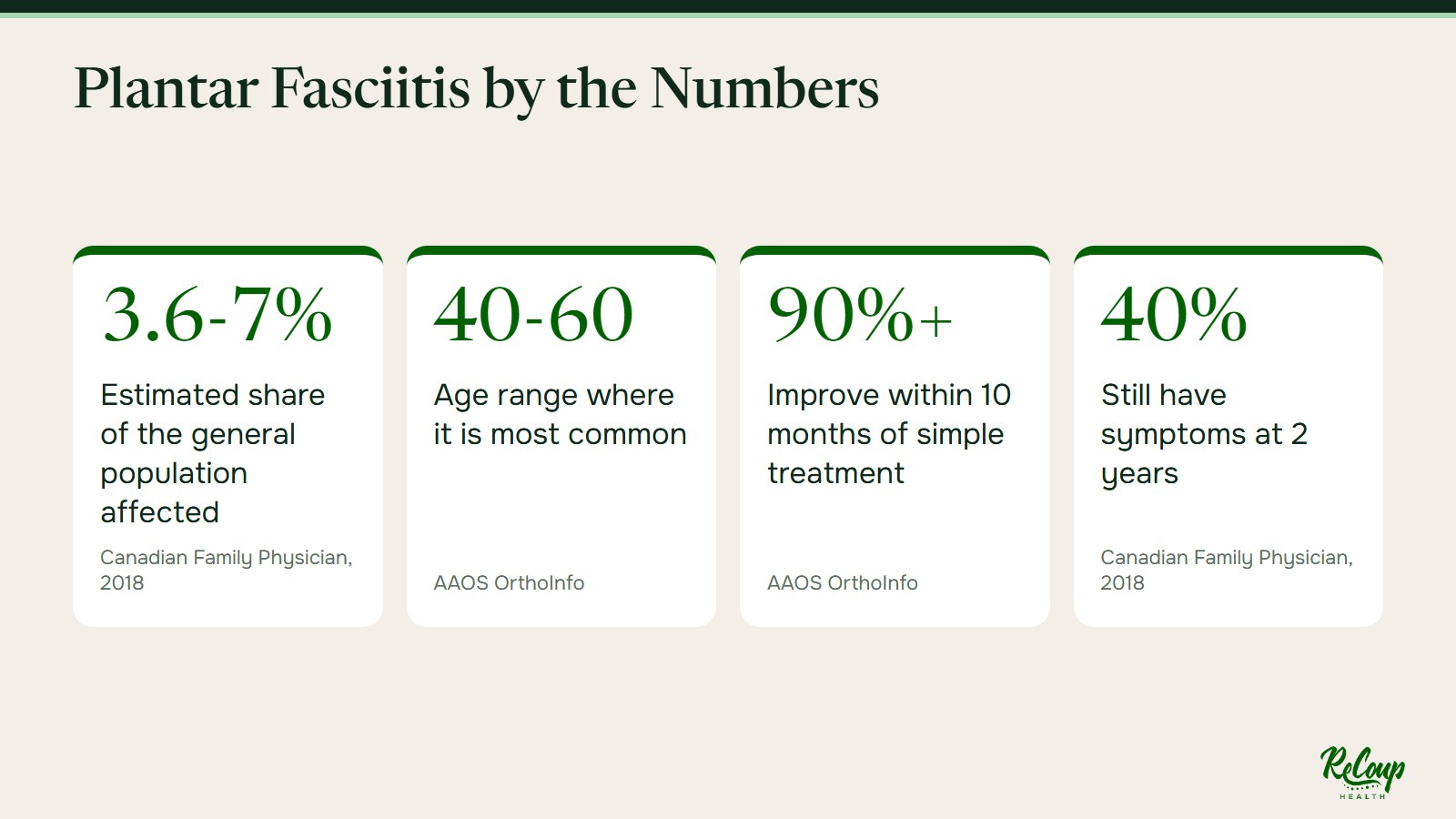
Those numbers describe a common condition, yet several other heel problems look much the same.
What Is Commonly Mistaken for Plantar Fasciitis
Conditions commonly mistaken for plantar fasciitis include insertional Achilles tendinitis, a heel stress fracture, trapped plantar nerves and heel spurs. Harvard Health and UC Davis Health both list look-alike conditions that clinicians rule out. The location and type of pain separate these conditions.
The table below compares plantar fasciitis with four common look-alikes.
| Condition | Main difference | Where the pain sits |
|---|---|---|
| Plantar fasciitis | Sharp pain with the first steps after rest | Bottom of the heel and arch |
| Insertional Achilles tendinitis | Pain where the Achilles tendon joins the heel | Back of the heel |
| Heel stress fracture | Pain that builds with weight-bearing activity | Inside the heel bone |
| Plantar nerve entrapment | Burning, tingling or numbness | Inner heel and sole |
| Heel spur | Bony growth that may cause no pain at all | Underside of the heel |
Cleveland Clinic notes that a heel spur can form in reaction to plantar fascia stress. Nerve involvement deserves extra attention. A 2026 Journal of the American Podiatric Medical Association review found neurological findings in 49% of 459 people with plantar fasciitis. A hands-on exam is the main way to sort these conditions.
How Is Plantar Fasciitis Diagnosed
Plantar fasciitis is diagnosed with a physical exam and a history of your symptoms. Cleveland Clinic states tests are not needed in typical cases. Imaging such as X-rays, ultrasound or MRI is used only when another problem is suspected.
A clinician presses along the heel, checks the arch shape and measures how far the ankle bends upward. Our physiotherapists also watch walking and test calf flexibility. A clear diagnosis then guides the treatment plan.
How Do You Get Rid of Plantar Fasciitis
Get rid of plantar fasciitis by calming the heel, then building the fascia’s tolerance to load over several months. A 2021 British Journal of Sports Medicine review of 51 trials named taping, stretching and education as core treatment. That review covered 4,351 participants. The answer to what is the treatment for plantar fasciitis follows a simple order:
- Cut back on the activity that flares the heel, and swap in cycling or swimming for a few weeks.
- Stretch the plantar fascia and calf, holding each stretch 10 seconds and repeating 20 times per foot, as AAOS suggests.
- Wear supportive, cushioned shoes and avoid walking barefoot on hard floors.
- Add high-load strengthening daily for at least 3 months, as Canadian Family Physician advises.
- Book a clinician review when pain has not improved after 2 weeks of self-care, per the NHS.
A 2003 trial of 101 patients found plantar fascia-specific stretching beat calf-only stretching for first-step pain at 8 weeks. Stretching that targets the sole works faster on morning pain than calf work alone. A guided heel rehab program sets the right load for each stage. Daily walking is one of the first loads people ask about.
Is Walking Good for Plantar Fasciitis
Walking is good for plantar fasciitis in short, comfortable amounts on supportive footwear. Pain-free walking keeps the fascia and calf conditioned. Walking that raises heel pain the next morning is too much for now.
Shorter, more frequent walks spread the load across the day. Soft paths and cushioned shoes reduce peak force on the heel. The opposite approach, pushing through sharp pain, sets recovery back.
What Is the Worst Thing You Can Do for Plantar Fasciitis
The worst thing you can do for plantar fasciitis is keep running or standing through sharp heel pain. Cleveland Clinic warns that returning to sport too soon can re-injure the fascia. Ignoring rising pain turns a short flare into a long-term problem. Other habits to avoid include:
- Walking barefoot on tile or hardwood floors
- Wearing worn-out shoes or flat, unsupportive sandals
- Jumping straight back to full running mileage
- Repeating cortisone injections, which AAOS warns can weaken the fascia and may lead to a tear
Avoiding those four habits gives the fascia time to settle. Time itself raises a common question about natural recovery.
Does Plantar Fasciitis Go Away on Its Own
Plantar fasciitis does go away for many people, but recovery takes months rather than days. Canadian Family Physician reports that symptoms improve within a year of onset regardless of treatment. About 40% of patients still have symptoms at 2 years, according to the same journal.
AAOS OrthoInfo reports more than 90% of patients improve within 10 months of starting simple treatment. A two-year follow-up of a stretching trial found 92% of 66 patients satisfied with their result. The timeline below maps the key checkpoints from these sources.
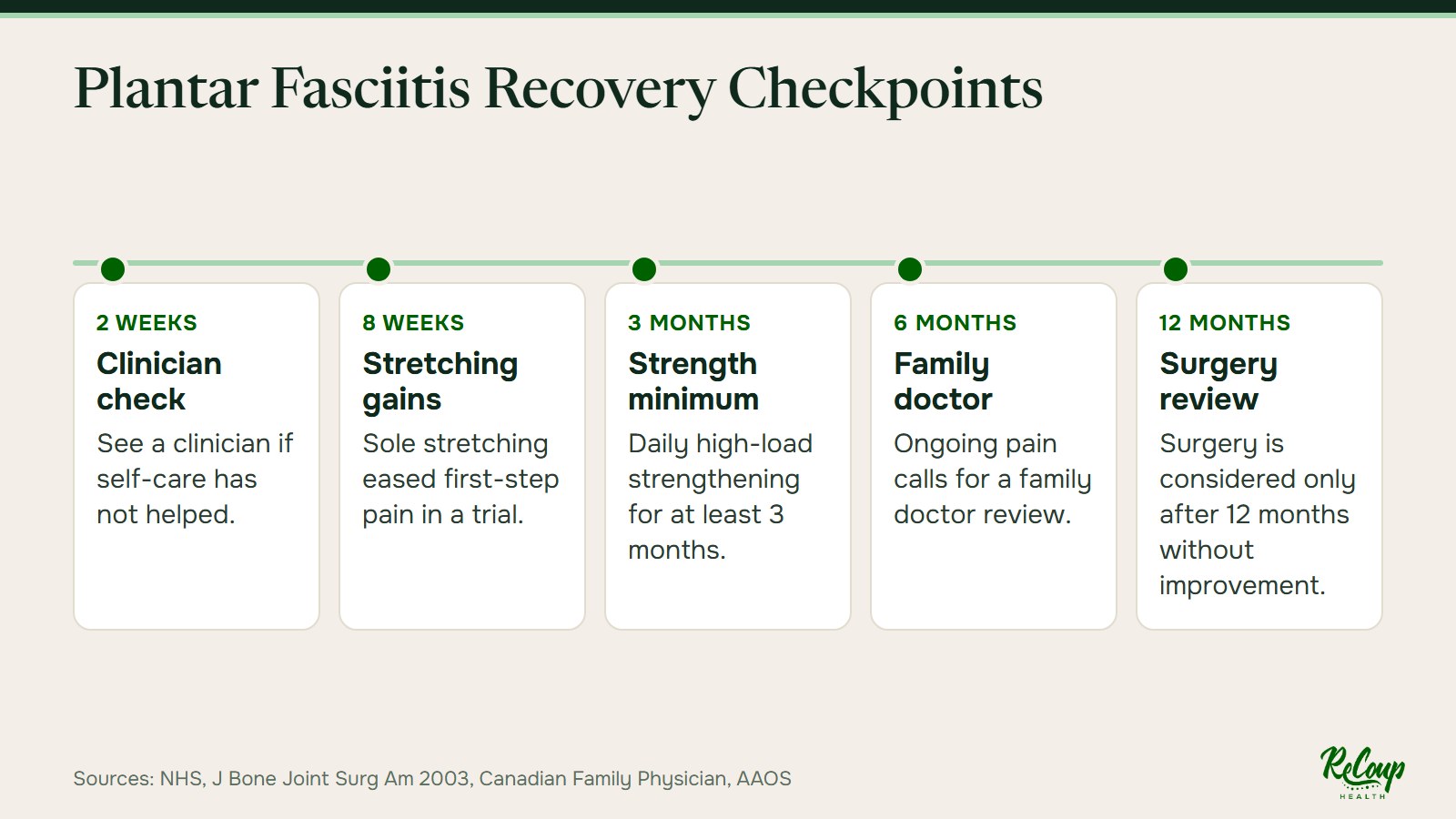
Pain that lasts beyond 6 months on an exercise program calls for a family doctor visit, according to Canadian Family Physician. Long-lasting heel pain can also benefit from chronic pain care that addresses sleep, activity and stress. Those longer cases lead to the side questions below.
What Else Should You Know About Plantar Fasciitis
Plantar fasciitis raises several side questions about permanence, support devices, hands-on care, surgery and warning signs. The short answers below cover each one.
Is Plantar Fasciitis Permanent
Plantar fasciitis is not permanent for the large majority of people. AAOS OrthoInfo reports more than 90% improve within 10 months of simple treatment. The condition can return when the same overload comes back, so long-term strength and footwear habits matter.
Do Orthotics Help Plantar Fasciitis
Orthotics help plantar fasciitis a small amount in the medium term, based on mixed evidence. A 2018 British Journal of Sports Medicine meta-analysis of 19 trials with 1,660 participants found a small pain benefit over sham insoles. Custom and prefabricated insoles performed about the same in that review. A fitting for arch-support orthotics works alongside exercise, not in place of it.
Can Massage Help Plantar Fasciitis
Massage can help plantar fasciitis pain in the short term, based on small trials. A 2026 International Journal of Therapeutic Massage and Bodywork trial studied 58 adults. The trial found myofascial release beat calf stretching for pain and function after 8 weeks. Hands-on soft tissue massage pairs well with home exercise for the calf and sole.
Assisted stretching is another hands-on option for people with tight calves and a stiff ankle. Sessions of fascial stretch therapy move the hips, calves and feet through a guided range.
What Is Plantar Fasciitis Surgery
Plantar fasciitis surgery is a procedure that releases part of the fascia or lengthens a tight calf muscle. AAOS OrthoInfo states surgery is generally saved for people with no improvement after 12 months of nonsurgical care. A 2025 Foot and Ankle Specialist review of 978 feet reported complications in 8.9% after endoscopic release. Recovery after any procedure benefits from structured post-surgery rehab.
When Should You Seek Urgent Care for Heel Pain
Seek urgent care for heel pain when you notice signs that go beyond a strained fascia. The NHS advises seeing a doctor for tingling or loss of feeling in the foot. People with diabetes and foot pain need early assessment, per the NHS. Other warning signs include:
- Severe pain that stops you walking normally
- A sudden, sharp pain under the foot after a cortisone injection, which can signal a rupture
- Heel pain that keeps coming back, per the NHS
Visit an emergency department or walk-in clinic for these signs, and talk to your family doctor about ongoing symptoms.
Frequently Asked Questions About Plantar Fasciitis
What Is the Fastest Way to Heal Plantar Fasciitis
The fastest way to heal plantar fasciitis combines activity changes, plantar fascia stretching and supportive shoes from the first week. A 2003 trial found sole-specific stretching cut first-step pain within 8 weeks.
Is Plantar Fasciitis Curable
Plantar fasciitis resolves for most people, as AAOS reports more than 90% improve within 10 months. No single treatment works for everyone, so care is adjusted over time.
Can Plantar Fasciitis Affect Both Feet
Plantar fasciitis can affect both feet at once, according to Cleveland Clinic. Pain in one foot at a time is the more common pattern, per the same source.
What Is Good for Plantar Fasciitis Pain
Stretching, taping, supportive shoes and a short break from aggravating activity are good for the pain. The 2021 British Journal of Sports Medicine review named taping and stretching as core treatment.
How Recoup Health Helps With Plantar Fasciitis
Recoup Health helps people with plantar fasciitis through assessment, exercise therapy and foot support under one roof. The short answer to what is plantar fasciitis is an overloaded heel band that responds well to patient, graded care. No doctor’s referral is needed to book.
Our clinic care team checks your heel, ankle range and walking pattern first. Physiotherapists, a chiropractor, registered massage therapists and a performance coach share notes on each case.
Each plan blends stretching, strengthening and load advice for the heel and calf. Regular plantar fascia rehab sessions track first-step pain and adjust the load each week.
Our clinic on Innovation Drive in Vaughan also offers orthotic fittings, massage and fascial stretching for the feet and calves. Every clinician at Recoup Health centre works together on stubborn heel pain and long-standing foot problems.
Questions about heel pain, orthotics or exercise plans are welcome before a first visit. To ask a question or book a visit, use the clinic booking page.